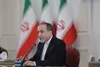
Diplomacy, Deterrence, and Domestic Change: Inside Pezeshkian’s First Year

Jalal Khosh-Chehre, the editorial chief of Borna News Agency wrote: Time never loses breath. In the blink of an eye, one year has passed since Masoud Pezeshkian navigated the arduous, obstacle-filled path to electoral victory. He entered the race at a moment when public trust in the state’s ability to deliver was severely damaged. Bureaucracy stood accused of inefficiency; external pressures had curbed much of the government’s maneuverability; and the political landscape was void of a strong, unifying vision for overcoming the country’s structural crises.
Despite this grim context, Pezeshkian succeeded — to a meaningful extent — in re-engaging public confidence and drawing citizens back to the ballot box. He also recognized early on that time is short, and opportunities, if left unused, slip away like fish from one's hand. To him, lethargy was the enemy of effectiveness.
From the morning of July 6, 2024 — the official announcement of his victory — Pezeshkian signaled his awareness of the responsibilities he had assumed. With honesty and clarity, and with acknowledgment of the Supreme Leader’s support, he pledged that the 14th administration would be structured around identifying and acting on the true priorities of the Iranian people. The first and foremost task, he said, would be forming a cabinet worthy of the hard-won trust placed in him. His aim: to build a government that would respond not just to immediate demands, but also to the country’s mid- and long-term needs — a government that could represent both the national interest and national security.
Now, a year after his victory, the time has come for preliminary evaluation. Has Pezeshkian delivered on his promise of responsive governance? Do his government’s decisions reflect the will of the people and address the urgency of national challenges? Can he be called a state-builder?
Throughout his campaign, Pezeshkian centered two strategic themes: external security and internal cohesion. He framed foreign policy around three interlinked principles: deterrence, peace, and diplomacy — not in abstraction, but as practical tools to build regional stability and connect Iran’s interests with those of its neighbors.
His approach, notably, gained attention not only at home but abroad — so much so that Tel Aviv immediately viewed the new government as a threat. The sabotage began on Day One. The assassination of Hamas political bureau chief Ismail Haniyeh in Tehran during Pezeshkian’s inauguration was, in effect, an early declaration of war against a government determined to create space for internal development through regional security.
Further complicating matters, the re-election of Donald Trump — and his revival of “maximum pressure” — reintroduced a set of geopolitical constraints far more severe than before. Trump’s full alignment with Israeli strategy compounded the challenges, while Europe, departing from its previous position, adopted a more hostile stance. The threat of reactivating the UN’s “snapback” mechanism — like a sword of Damocles — was placed squarely above the 14th government’s head, aiming to restrict its room for rational foreign policy maneuver.
This was not the environment Pezeshkian had hoped for. Nevertheless, he remained committed to the view that even if “cooperative diplomacy” cannot eliminate hostility, it can at least reduce its impact. The 12-day joint Israeli-American war on Iran marked a key inflection point — the culmination of external pressures confronting his administration. What lies ahead is uncertain.
Domestically, President Pezeshkian has had to navigate a host of structural challenges in both economic and socio-cultural policy. On the economic front, he faces a binary choice:
Option A: Preserve the entrenched institutionalist model;
Option B: Push for transformation by empowering the private sector.
All signs suggest Pezeshkian leans toward the latter — but with a caveat: Does the current system truly tolerate private-sector independence?
More than anything, Pezeshkian sees his government’s special task as negotiating not just methods of governance, but eventually, its functional essence. That negotiation is still incomplete — not only in the economic sphere, but also in cultural and social arenas. Nevertheless, some progress across various levels and ministries is undeniable.
But what matters most at this moment is the passage of time — which never slows, never waits, and never pauses.
End Article