From Iran to Venezuela: Reviewing U.S. Foreign Policy Failures in 2025
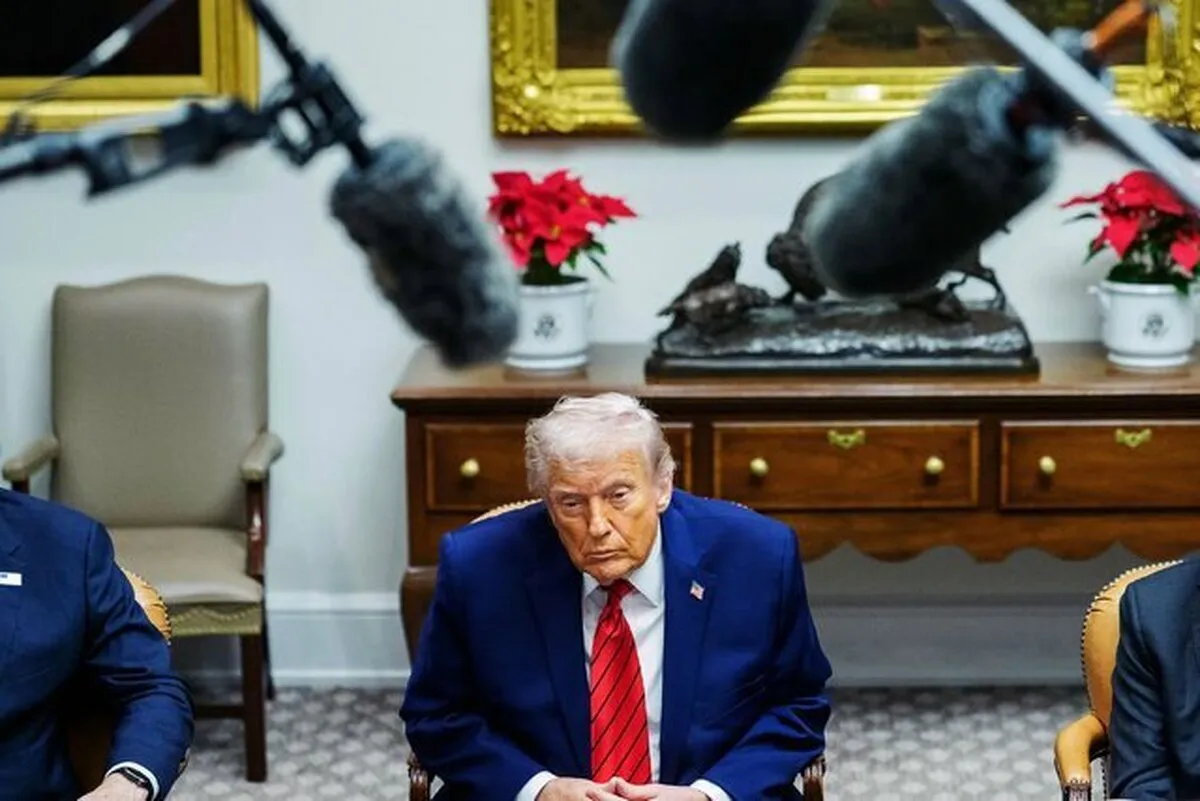
Tehran - BORNA - According to a report by the Quincy Institute for Responsible Statecraft, the first year of an administration that took office promising "realism" and "America First" has resulted not in a clear shift toward restraint, but in a deeply contradictory record. The article notes that U.S. foreign policy in 2025 has been caught between limited progress toward responsible statecraft and the continuation of failures rooted in Washington’s interventionist habits—habits the administration had pledged to abandon.
Complicity with Tel Aviv Against Iran
The article identifies the "crisis of attacks on Iran" as one of Trump’s most significant foreign policy failures in 2025. According to the Quincy Institute, after the U.S. government spoke of readiness for negotiations with Iran, Washington’s decision to join the Zionist regime’s military strikes abruptly blocked the path of diplomacy.
The report highlights that the U.S., instead of adhering to its own "red lines"—preventing the weaponization of Iran’s nuclear program—adopted the Zionist regime’s red lines, namely the total prohibition of uranium enrichment. This shift brought negotiations to a complete deadlock. The American think tank warns that as the occupying regime’s Prime Minister pushes for another war, this time centered on Iran’s missile program, the U.S. government’s ability to resist these pressures has become a decisive test for Trump’s claim of restraint in West Asia.
Escalation in Venezuela
According to Quincy, the second major failure of the White House is the escalation of tensions with Venezuela. The deadly seizure of vessels without clear evidence of illegal activity and without Congressional authorization is described as an illegal act of war.
The report notes that the U.S. government has provided shifting justifications for this approach, ranging from anti-drug trafficking to claims of "theft of American oil" by Venezuela. This inconsistency reinforces the perception that the primary goal is regime change in Caracas—a path the author argues will likely lead to widespread instability and a repetition of disastrous regional experiences.
Chronic Failure in Syria
The article also characterizes the continued U.S. military presence in Syria as another chronic failure. The death of American troops in Syria is cited as a result of the Trump administration’s inability to decisively end a project that lost its strategic justification following the defeat of ISIS. U.S. forces remain in Syria without a clear objective, turning them into permanent targets for extremist groups and transforming this presence from a security asset into a deadly liability.
Unconditional Support for the Zionist Regime
In another section, the Quincy Institute sharply criticizes the U.S. administration’s approach toward the Zionist regime, describing it as a total failure to apply meaningful pressure. Unconditional support for the regime’s actions has removed any incentive for a ceasefire or a political solution with the Palestinians. Furthermore, the sanctioning of International Criminal Court (ICC) judges investigating the conflict is viewed as an abandonment of international law, contradicting the claims of both "restraint" and "America First" policies.
Congressional Retreat from War Powers
Finally, the Quincy Institute highlights the role of the U.S. Congress in undermining the promise of restraint. The report cites a close vote in the House of Representatives that led to the defeat of a resolution intended to prevent unauthorized military action against Venezuela. This vote is seen as a failure of the legislative branch to uphold its constitutional duty regarding war powers, particularly after the administration had already placed Venezuela under a naval blockade.
In conclusion, the Quincy Institute describes U.S. foreign policy in 2025 as a fragmented and unstable project. The persistence of Washington’s interventionism continues to overshadow its policies, severely weakening the claim of a genuine transition to responsible statecraft.
End Article