Leader hails bazaaris as most loyal to Islamic Republic, says foes behind currency devaluation
|
2026/01/03
|
15:43:29
| News ID: 3378
Leader hails bazaaris as most loyal to Islamic Republic, says foes behind currency devaluation
Leader of the Islamic Revolution Ayatollah Seyyed Ali Khamenei says the national currency devaluation is “unnatural” and involves “the hand of the enemy.”

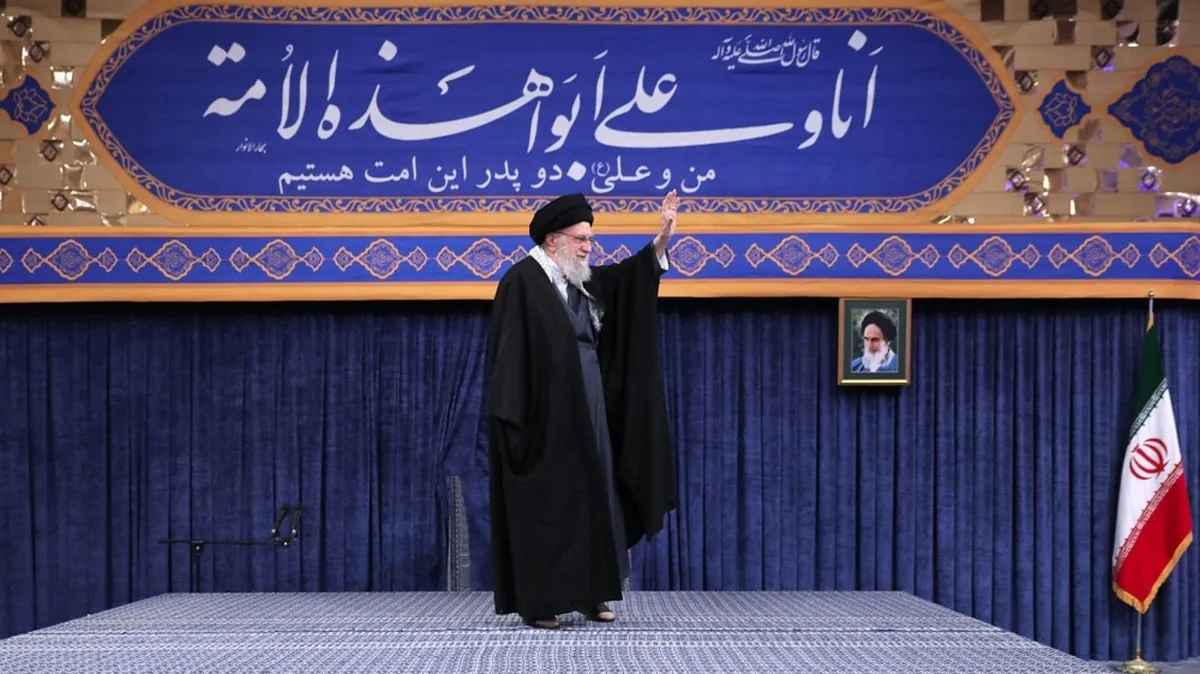
Tehran - BORNA - The Leader made the remarks on Saturday, during a meeting with families of martyrs, including the family of Lieutenant General Qassem Soleimani, who was assassinated by the US military in Baghdad, Iraq, on January 3, 2020.

Referring to the recent unrest across the country, which began at Tehran’s Grand Bazaar last week, Ayatollah Khamenei said the bazaari class is “among the most loyal segments of the country to the Islamic Revolution,” stressing that “one cannot clash with the Islamic system in the name of the bazaar and merchants.”

He said merchants’ concerns were justified, noting that when a merchant looks at the country’s monetary conditions, the decline in the value of the national currency and its instability, “he says ‘I cannot do business,’ and this is true.”

Ayatollah Khamenei said that the president and senior officials are seeking remedies, adding that the unchecked rise in foreign currency is unnatural and involves “the hand of the enemy,” which he said must be stopped.

The Leader warned against the exploitation of legitimate economic grievances by hostile elements, saying what matters is that “a number of provoked individuals who are mercenaries of the enemy stand behind the bazaaris and chant anti-Islamic, anti-Iranian, and anti-Islamic Republic slogans.”

Ayatollah Khamenei stressed that “protest is legitimate, but protest is different from rioting,” adding that officials must engage with protesters, because “talking to the protester is different from talking to the rioter; talking to the rioter is of no use, and the rioter must be put in his place.”

He underlined that it is “absolutely unacceptable” for groups to come “under various titles and names with the intention of sabotage and creating insecurity,” stand behind “faithful, healthy and revolutionary bazaaris,” exploit their protests and engage in unrest.

The Leader emphasized the need to recognize the enemy’s tactics, saying the enemy “does not sit idle and exploits every opportunity,” adding that officials are and will remain present on the ground, but “what matters is the collective nation.”

Ayatollah Khamenei added that when the enemy seeks to impose demands arrogantly on the country, the government and the nation, one must “stand firmly against the enemy and bare one’s chest.”

“We will not back down before the enemy, and by relying on Almighty God and the support of the people, God willing, we will bring the enemy to its knees.”

The Leader further elaborated on the defining traits of Martyr Qassem Soleimani, saying three qualities — “faith, sincerity and action” — were the core characteristics of the revered martyr, who he described as “a comprehensive and complete human being of our time.”

Elsewhere in his remarks, Ayatollah Khamenei highlighted General Soleimani’s deep faith in God, divine support and the righteousness of his cause as his most prominent attributes.

He said Martyr Soleimani was “a man of divine sincerity” who never acted for reputation, praise, or public acclaim, but solely out of duty and devotion.

Praising his consistent presence in all necessary arenas, the Leader said General Soleimani stood in contrast to those who “understand well and speak well, but do not take action.”

Ayatollah Khamenei noted that General Soleimani played a role in safeguarding and guiding the course of the Islamic Revolution and confronting acts of subversion in Kerman, and later in the Quds Force.

He also cited his contributions to defending holy shrines, confronting the Daesh terrorist group and fulfilling responsibilities in other critical fields.

The Leader underscored that General Soleimani’s legacy lay not only in his strategic role but in the unity of belief, purity of intention and readiness for action that defined his life and conduct.

End Article

Your comment