Baghaei: Decision to Reopen Strait of Hormuz Governed by National Decision-Making Framework
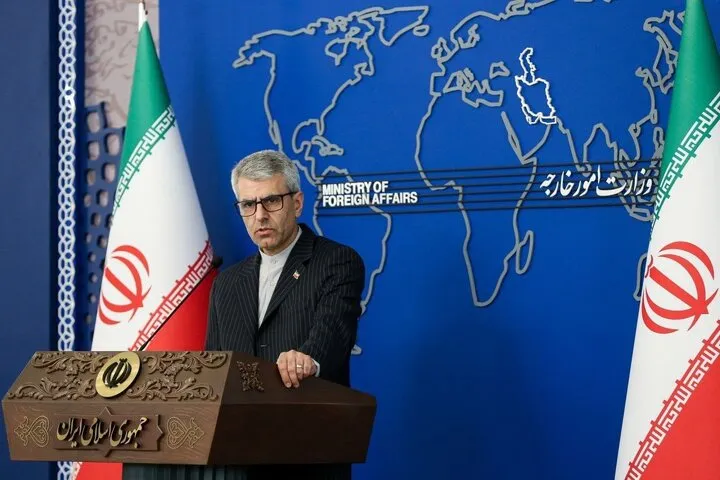
Tehran - BORNA - In a televised interview addressing media reactions to the unexpected message regarding the reopening of the Strait of Hormuz announced by the Foreign Minister on Friday evening, Esmaeil Baghaei said: "Iran is the guardian of the Strait of Hormuz and will show no leniency in implementing measures that guarantee Iran's rights whenever necessary."
Earlier today, Foreign Minister Seyed Abbas Araghchi issued a message stating: "Following the declaration of the ceasefire in Lebanon, the passage of all commercial vessels through the Strait of Hormuz is declared completely free for the remainder of the ceasefire period." He emphasized that this traffic must proceed through routes coordinated and pre-announced by the Ports and Maritime Organization of the Islamic Republic of Iran.
The Foreign Ministry spokesperson noted: "What Mr. Araghchi announced is within the framework of the ceasefire agreement declared on April 8 (Farvardin 19) between Iran and the United States."
Highlighting specific keywords in the Foreign Minister’s post, Baghaei added: "Mr. Araghchi emphasized that this matter is in line with the ceasefire implemented in Lebanon since last night. In this context, Iran decided that transit in the Strait of Hormuz should proceed according to the conditions specified by Iran."
"In simple terms," the diplomat explained, "the enemy had reneged on implementing the ceasefire in Lebanon—which was one of the conditions for the ceasefire between Iran and the U.S.—and we took the necessary reciprocal actions. Given that the ceasefire now includes Lebanon and our condition has been met, we have fulfilled our obligations under the ceasefire agreement. Therefore, this is not a new development; it is the same agreement reached on April 8, stating that commercial vessels may cross the Strait in coordination with Iran."
Baghaei continued: "As the coastal state of the Strait of Hormuz, we manage the traffic as previously announced, and navigation must follow the route determined by Iran. This will be operational until the specified end of the ceasefire."
Regarding reports that the opposing side had initially failed to execute the agreement correctly, he remarked: "Now that the opposing side has decided to fulfill its commitment regarding the ceasefire, we have announced that traffic in the Strait of Hormuz will proceed based on coordination with competent Iranian authorities throughout the ceasefire period."
In response to a tweet by Donald Trump suggesting that the U.S. naval blockade of Iran would continue, Baghaei noted: "Our hands are not tied. I ask the media and the public not to pay too much attention to the other side's media games. We have seen them take contradictory positions within 24 hours."
He added: "Just as we are serious in fulfilling our commitments, if we see the other side intends to act in bad faith—which often seems to be the case—Iran will take necessary measures, and all required preparations have been made."
Baghaei emphasized: "If the naval blockade of Iran continues, have no doubt that Iran will take necessary actions; we do not accept a naval blockade. We are a country that negotiates correctly, monitors national interests closely, and is courageous in defending them. Iranian diplomacy is the continuation of the defense of the country's interests."
He concluded by reiterating that the decision regarding the Strait of Hormuz was not made solely by the Foreign Ministry but "within the framework of the country's national decision-making system."
"The framework of the ceasefire understanding is clear," Baghaei stated. "This ceasefire lasts for two weeks. Negotiations over the last seven or eight days have been aimed at laying the ground for a complete end to the war. We have not discussed a renewal of the ceasefire. Iran's focus, with Pakistan's mediation, is to ensure the conditions for ending the war are met while realizing and protecting Iran's interests."
End Article