Senior Iranian Diplomat in Egypt: Tehran Seeks Just and Equal Negotiations
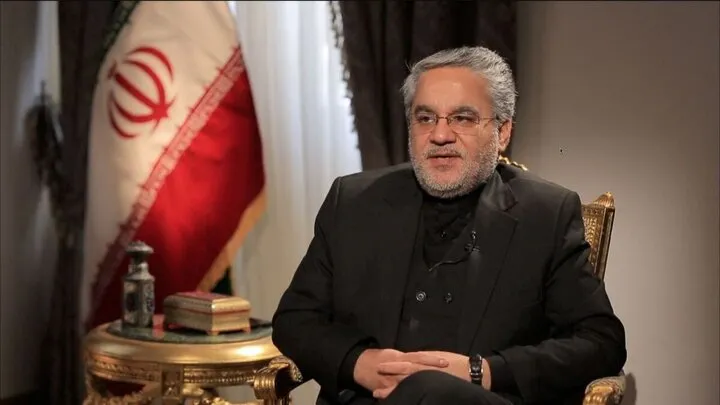
Tehran - BORNA - Mojtaba Ferdousipour, the Head of the Interests Section of the Islamic Republic of Iran in Cairo, explained Iran’s principled positions regarding regional developments, negotiations with the U.S., the issue of the maritime blockade, and relations with Persian Gulf countries in an interview with Algerian National Television.
Referring to the recent visit of Iranian Foreign Minister Abbas Araghchi to Islamabad, Ferdousipour assessed this trip within the framework of bilateral relations and international consultations between Iran and Pakistan, stating: "The Iranian Foreign Minister had no intention or plan to meet with American representatives in Pakistan."
He further described the claims made by U.S. officials, including Donald Trump, regarding readiness for direct negotiations as categorically "completely baseless, delusional, and absurd," adding: "What is being raised by the Americans in cyberspace and the media is merely media hype and bears no sign of Washington's sincerity."
In response to the question of why Iran refrains from direct negotiations with the U.S., the senior Iranian diplomat in Egypt noted: "The strategy of the Islamic Republic of Iran has always been based on negotiation and diplomatic solutions, and it has always strived to keep the window of diplomacy open. However, the bitter experience of the past, especially the 12-day imposed war last year and the recent 40-day imposed war, showed that the Americans never wanted real negotiations and agreements, and under the cover of dialogue, they committed aggression against the Islamic Republic of Iran. In such circumstances, what guarantee is there that in a new round of negotiations, the American side will not again assault Iran? The presence of U.S. aircraft carriers in the Middle East and the Red Sea also signifies Washington's hostile and insincere intentions."
The Head of the Iranian Interests Section in Cairo emphasized: "The Islamic Republic of Iran is not looking for war; just and equal negotiation based on a 'win-win equation'—and not the imposition of U.S. or Zionist regime demands—is the only path acceptable to Tehran."
He added: "We will not surrender to excessive demands, and negotiations must guarantee all of Iran's rights regarding the nuclear program, the complete lifting of sanctions, the release of frozen assets, and the ending of the maritime blockade imposed after the recent war."
Ferdousipour further characterized the maritime blockade by the United States as a clear violation of international standards and maritime laws in open waters, calling it "piracy" by the U.S.
He emphasized: "The implementation of a blockade in the Red Sea and the Indian Ocean by the U.S. is not only illegal but also constitutes a violation of the ceasefire and a new act of aggression against the Islamic Republic of Iran."
Regarding developments related to the Strait of Hormuz, the senior diplomat stated: "Before the aggression against Iran, the Strait of Hormuz was open to everyone and traffic was conducted freely. However, if any aggression is carried out against the Islamic Republic of Iran, Iran has the right to take control and management of the Strait of Hormuz; because more than a thousand kilometers of Iran's coast overlook this region, and defending national security and interests in this strategic waterway is Iran's definitive right."
The Head of the Iranian Interests Section in Cairo, pointing to Iran’s improving relations with Persian Gulf countries, especially Saudi Arabia, said: "Iran emphasized holding high-level and foreign ministerial meetings in the region both before and during the war. The most important principle for Tehran is the non-deployment of U.S. or Zionist military bases on the soil of neighboring countries to threaten Iran."
He added: "We emphasize that regional security cannot be imported or achieved through the presence of foreigners. Iran seeks to form joint committees with friendly and neighboring countries after the war to ensure sustainable security and prevent the presence of foreign elements in the region."
In conclusion, Ferdousipour once again emphasized Iran's commitment to equal and honorable diplomatic solutions.
End Article