An Unprecedented Farewell: Remembering the Historic Funeral of Ayatollah Khomeini in June 1989
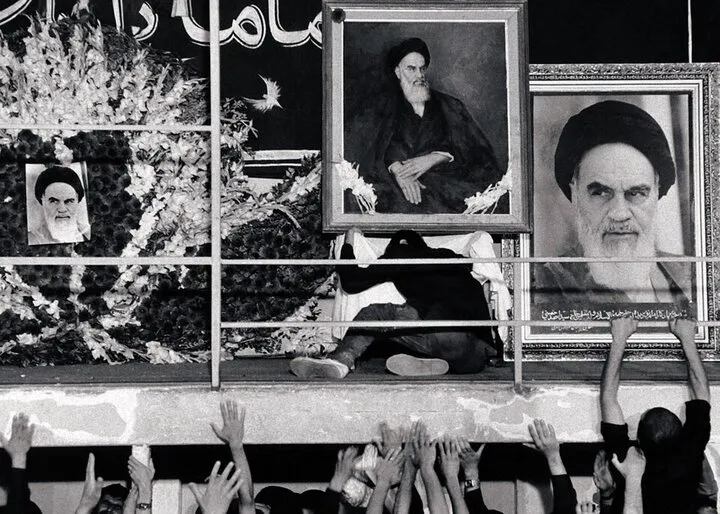
Tehran - BORNA - On the late evening of June 3, 1989, Ayatollah Ruhollah Khomeini, the founder of the Islamic Republic, passed away at a hospital in Tehran. The news of his demise was broadcast over Iran's national radio the following morning, on June 4, rapidly spreading across the country and plunging the revolutionary society into deep shock and mourning.
For a generation that knew the 1979 Islamic Revolution, the formation of the Islamic Republic, and the Iraqi-imposed war primarily through his leadership, the passing of Ayatollah Khomeini was not viewed merely as the loss of a political figure. It was a profound collective grief; many felt that an entire chapter of their personal and national history had come to an abrupt end.
If June 1989 were to be narrated solely through images, the story would not begin with the faces of high-ranking dignitaries, but with an endless tide of people. In most archival photographs of the funeral, the absolute protagonist is the immense mass of citizens packed into every frame.
The First Gathering at Jamaran and the Glass Enclosure
The initial outpouring of grief began in Jamaran, the neighborhood in northern Tehran where the revolutionary leader had resided for years. Thousands converged on the Jamaran Hussainiya. Archival footage shows scenes of intense emotion, with some mourners reaching the empty chair where Ayatollah Khomeini used to deliver his speeches, tearing its white cloth cover into small pieces to keep as sacred mementos.
On June 5, the body was transferred to the Grand Musalla of Tehran. To allow the vast public to bid their final farewells, a refrigerated glass structure was mounted on top of several shipping containers. The body was wrapped in a traditional shroud, with his black turban placed upon his chest.
By that day, Tehran had transformed into an entirely different city. The streets were packed with millions of mourners who had traveled to the capital from various provinces. The transportation infrastructure was severely strained, and major routes became completely impassable. However, the events of the following day would escalate to an entirely new scale.
The Procession and Out-of-Control Crowds
In the early hours of June 6, 1989, Grand Ayatollah Seyyed Mohammad Reza Golpayegani performed the funeral prayer (Namaz-e Mayyit) over the body. Following the prayers, the coffin was placed inside a truck to be transported to the burial site near the Behesht-e Zahra cemetery, with a helicopter assigned to escort the convoy from above. However, the planners were soon confronted by an unexpected reality: the sheer volume of the crowd far exceeded the organizers' maximum estimates.
The turning point of the procession occurred minutes later. As the coffin began moving toward Behesht-e Zahra, a massive wave of mourners surged forward. The crowd swarmed the transport vehicle, causing organizers to completely lose control of the procession. The crush became so severe that proceeding along the planned route became physically impossible.
Fearing for the integrity of the procession, officials made the decision to abruptly pull the coffin from the main route. The body was temporarily removed from public view and airlifted back to Jamaran by helicopter to allow the crowds to disperse.
A Controlled Burial and Archival Legacy
Following an official announcement postponing the burial, authorities attempted to manage the situation and clear the pathways. However, the sheer volume of people occupying Tehran's highways, streets, and routes leading to Behesht-e Zahra made a return to normal operating conditions impossible.
Ultimately, the burial was executed later that day under an entirely different, highly restricted arrangement and with maximum security management. In the initial days following the interment, no prominent monument stood over the grave; only a simple, temporary protective fence separated the burial plot from the incoming waves of visitors.
The collection of photos and films remaining from those days do more than just document a ceremony; they serve as a historical record of a major collective experience. From the gridlock on the Abbas Abad hills to the helicopter trying to touch down amid a dense sea of mourners, these visual frames remain the primary means of analyzing one of the most significant mass gatherings in the contemporary history of Iran.
End Article