Pezeshkian, Trump Sign Islamabad Document; Washington Succumbs to Tehran’s Terms
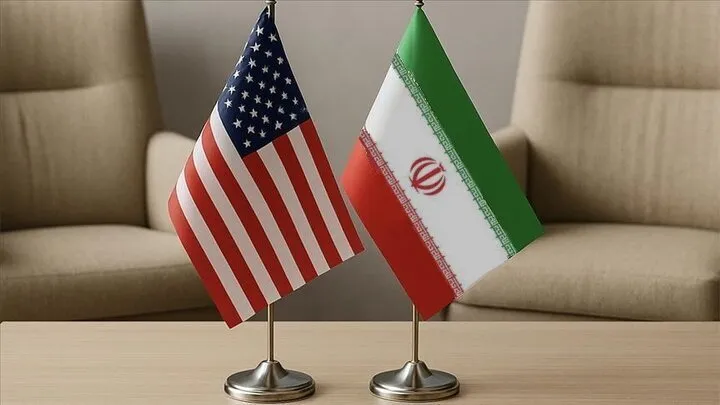
Tehran - BORNA - In the early hours of Thursday, the 14-point Islamabad MoU was electronically signed by Iranian President Masoud Pezeshkian and his American counterpart, Donald Trump. This sudden signing by the leaders occurred even though negotiating delegations—led by Iranian Parliament Speaker Mohammad Bagher Ghalibaf and US Vice President JD Vance—were previously scheduled to travel to Switzerland on Friday to finalize the mechanisms. Ultimately, the urgency of the matter and the insistence on directly securing strategic terms led to the digital signing of the document by the two presidents.
With the Islamabad agreement now signed, the executed copies will soon be exchanged between the two sides. International observers believe that the leaders' decision to sign this framework document directly and remotely was a "shrewd legal calculation" by Tehran to maximize the political cost for Washington in the event of any potential breach of trust by directly binding Trump to the deal. Cross-checking the provisions of this MoU with the codes sent from the White House reveals a deep "terminological battle" that illustrates Tehran's strategic superiority.
In the security layer of the document, which rests on the first and second clauses, the parties agreed to the immediate cessation of military operations across all fronts and respect for national sovereignty. By conditioning the entire agreement on the security of the northern front and specifically enshrining Lebanon, Iran forced Washington to accept this independent variable. Even though the White House attempted to broaden the ceasefire umbrella without naming specific groups by inserting the phrase "allies in the current war," it was ultimately forced to accept Tehran's conditions. In the realm of international waterways and the provisions of the fifth clause, imposing a short-term timeline of "for 60 days only" for free passage from the Persian Gulf to the Sea of Oman grants Tehran the upper hand as a "geopolitical leverage." This is particularly true given that the White House, by explicitly accepting the term "the sovereign rights of coastal states," was forced to invalidate the regulatory legitimacy of its own fleet and bow to the bilateral sovereignty of Tehran and Muscat over the Strait of Hormuz.
In the financial geopolitics of the MoU, which is rooted in the sixth and eleventh clauses, Trump’s signature on a reconstruction fund of "at least $300 billion" marks a total defeat for the US Treasury’s (OFAC) sanctions doctrine. Although the American side seeks to share the financial burden of these reparations with regional capitals by adding the caveat "with regional partners," Iran's strategic victory culminates in the clause regarding frozen assets. Here, by succumbing to the unprecedented phrase "payable to any ultimate beneficiary designated by the Central Bank of Iran," Washington has effectively conceded to the expiration of secondary monitoring channels (such as the Qatar or Switzerland models) and surrendered asset allocation sovereignty to Tehran. This breakthrough, alongside the tenth clause—the US commitment to issue immediate waivers for the sale of petroleum and petrochemical derivatives—fully revives Iran's export markets.
Admittedly, based on the eighth clause, the existence of the interpretive phrase "minimum methodology" in the section concerning the dilution of nuclear materials in the English text creates a kind of "strategic ambiguity" that demands utmost vigilance from Iran's negotiating team in the subsequent phases. However, the conditional structure of the thirteenth clause of this MoU proves that Tehran's "leverage strategy" has been entirely successful; this is because Iran's entry into the hard core of final negotiations and discussions on the ninth clause (maintaining the status quo) is strictly conditional upon the continuous, tangible implementation and realization of concessions, including the complete lifting of the naval blockade (fourth clause), the issuance of waivers, and the release of assets.
An examination of the format of the published documents reveals further dimensions of this event. Glaring textual disarrays and typographical errors in the version issued by the White House (such as employing fabricated terms instead of words like "after" or "MoU") clearly demonstrate that Washington was under crushing time pressure and, in its haste to buy a temporary freeze of Iran's nuclear program, signed this document out of sheer desperation and submission.
With the official signing by both leaders, the first phase of tangible commitments begins today. In this regard, under the mediation and oversight of Pakistan, arrangements for lifting the naval blockade on Iranian ports and reopening transit through Hormuz have been placed on the agenda, leading toward the final agreement being ratified under a "binding UN Security Council resolution" in accordance with the fourteenth clause after this 60-day period expires.
End Article