Iran's responses to US aggression push Washington back toward negotiations, expert says
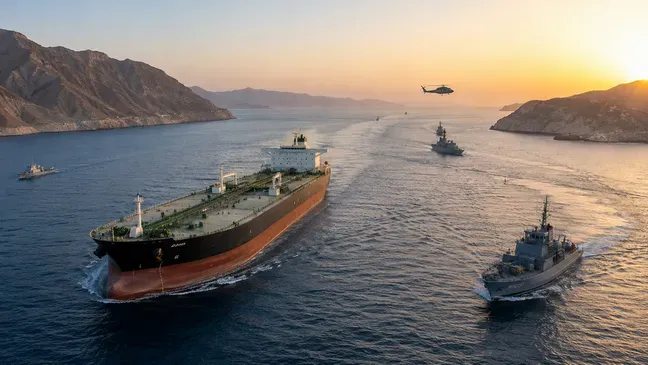
Tehran - BORNA - In an exclusive interview with BORNA, Morteza Makki discussed the reasons behind the Omani delegation's visit to Tehran, saying that following the escalation of tensions between Iran and the US, Washington attempted to bypass Iran's role in controlling the strait by creating a southern corridor through Omani waters.
He said this was not something Iran could ignore, as the complete implementation of such a strategy would have eliminated one of Iran's key strategic achievements and weakened its leverage against US actions.
Makki noted that Iran has emphasized that security in the region must either exist for all or for none, a principle that has become central to Iran's strategy against US policies and its regional allies. While this approach has imposed costs on Iran, he said, it has imposed far greater costs on the US and its partners.
The expert said Iran's responses to US aggression appear to have pushed Washington back toward the negotiating table, whether to buy time or reach a new understanding. The Omani delegation's visit to Tehran is aimed at facilitating a joint framework for shipping in the strait.
Makki added that Oman has traditionally sought to maintain a balanced role as a mediator, but had come under US pressure in the past to pursue alternative routes, a policy that ultimately led to war.
He warned that continued conflict would impose heavy costs on both sides, with rising oil prices being a key factor affecting the global economy and the trajectory of tensions. If the war continues and threats are realized, Iran's infrastructure could be targeted, he said.
Makki stressed that Iran has shown it does not merely issue threats. If its infrastructure is attacked and Washington pursues a policy of maximum pressure, the costs will not be borne by Iran alone, but by regional countries and the global economy as well. These considerations have pushed the US and regional states back toward mediation to manage tensions and prevent crisis escalation.
End Article