US oil industry caught off guard by Trump’s major Venezuela deal
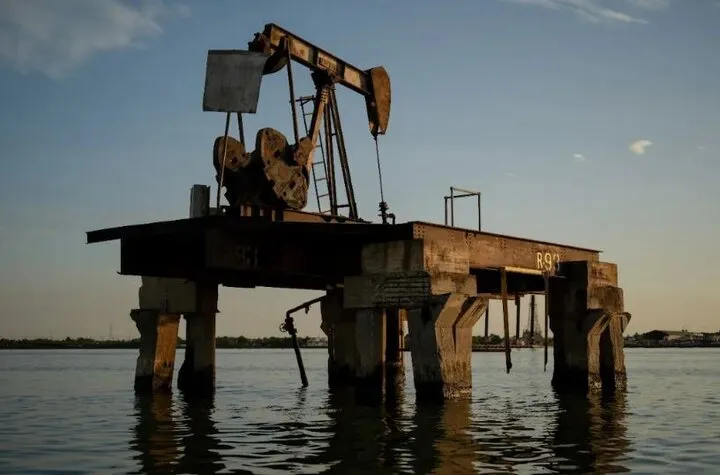
Tehran - BORNA - The agreement has triggered unease among industry leaders who fear it could cut across ongoing commercial negotiations and shut companies out of some potentially valuable opportunities in Venezuela, Bloomberg reported, citing people familiar with the matter who requested anonymity to speak candidly.
Some of those people acknowledged that publicly criticizing the agreement was difficult given Trump’s clear enthusiasm for it.
Energy companies’ interest in reviving Venezuela’s severely damaged oil industry was on display last Wednesday at an event in Caracas attended by acting President Delcy Rodriguez, US Energy Secretary Chris Wright and executives from companies including Chevron Corp., Eni SpA and GE Vernova, which signed investment agreements.
Those deals, which had taken months to negotiate, were quickly overshadowed by an agreement Trump announced last Friday on Truth Social.
Under the deal, the US government will acquire a 35% stake in North American Blue Energy Partners, or NABEP, a privately held oil company led by controversial investor Alejandro Betancourt that has secured 100-year rights to develop 17 Venezuelan oil fields.
People familiar with the matter said the Betancourt agreement, driven by the US State Department and Pentagon, caught many energy companies and executives by surprise, including some already involved in commercial negotiations in Venezuela.
The industry’s unease highlights a challenge for the Trump administration as it pursues competing priorities in Venezuela.
While Trump has sought to rapidly secure commercial deals — along with new flows of oil and revenue — some of the major developers best positioned to boost the country’s heavy-crude production have moved more cautiously because of lingering political and economic risks following the arrest of Nicolas Maduro.
The administration’s acquisition of a 35% stake in NABEP, together with a guaranteed right to obtain 20% of the company’s production at cost, has created another concern: that Washington is effectively helping build a state-backed oil company that could compete with US producers, including companies that have no intention of entering Venezuela.
“When the government takes an equity stake in a private company, it has an incentive to preserve that investment,” said Kevin Book, managing director of Washington-based ClearView Energy Partners. “The question is whether it does so in a way that complements the rest of the industry — or competes with it.”
People familiar with the matter said administration officials have sought to ease some of the oil industry’s concerns, portraying the NABEP agreement as providing greater security for private-sector deals in Venezuela.
Officials have argued that the company is not seeking to compete with the private sector.
A US official on Tuesday rejected the characterization of the agreement as an obstacle to other companies, stressing that the deal covers a specific set of oil fields and that other producers remain free to negotiate separately with the Venezuelan government.
Separately, a White House official pointed to agreements signed last week by Chevron and GE Vernova as evidence that multiple companies have successfully negotiated deals in Venezuela.
Industry figures have also expressed concern over the influence accumulated by Betancourt, an entrepreneur with a controversial history in Venezuela who previously faced money-laundering and tax-fraud allegations in Europe and the United States.
Betancourt has denied wrongdoing and has never been charged with a crime.
US officials have defended their decision to work with Betancourt and his company, describing NABEP as a constructive partner and an established oil-industry player capable of rapidly increasing production.
A US official told reporters Tuesday that NABEP also provides access to very large proven oil reserves.
“The transaction was made with a private company that has the best track record of success of any company operating in Venezuela — a proven operator that knows how to increase production and can operate there,” the White House said in a statement Wednesday, according to Bloomberg.
End Article