By any metric, US is losing war against Iran: Foreign Policy
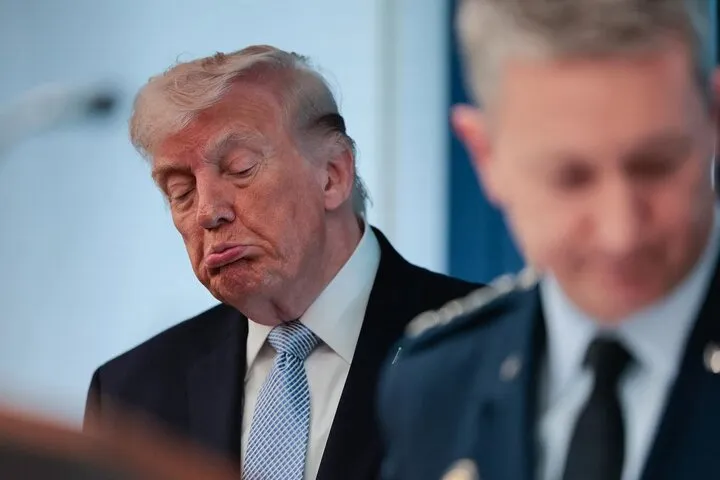
Tehran - BORNA - While Trump stated on Wednesday that "hopefully we're close to the end of the war" and claimed Tehran seeks an agreement, the American magazine noted that such optimism starkly contradicts the situation on the ground.
Despite tactical strikes, the broader campaign has evolved into a strategic catastrophe for Washington. The war has exposed severe vulnerabilities in the US military posture, overstretched its armed forces, cost American taxpayers an estimated $38.1 billion, and triggered a global energy crisis. Domestically, public opposition is mounting, with a growing number of congressional Republicans voting to halt hostilities and one Republican lawmaker introducing articles of impeachment against Defense Secretary Pete Hegseth over the handling of the war.
"If you rewind to February and look at what the US said it was going to do, the US has failed in its primary strategic objectives," said Gregory Brew, an Iran expert and senior analyst at Eurasia Group.
The analysis pointed out that Washington has failed to diminish Iran's regional influence or weaken allied resistance forces. Despite early declarations by Trump and Chairman of the Joint Chiefs of Staff Gen. Dan Caine that US operations would eliminate Tehran's power-projection capabilities, regional groups have expanded their operational reach.
In Yemen, Ansarullah forces recently made significant advances along the Red Sea coast, taking control of the port city of al-Mukha (Mokha) and strategic positions on Mayyun (Perim) Island. This has granted the movement effective operational control over the vital Bab el-Mandeb Strait, compounding global maritime trade disruptions amid the ongoing closure of the Strait of Hormuz. In parallel, cross-border exchanges with Saudi Arabia have escalated, while a recent drone strike on the 750-mile Saudi East-West pipeline shut down approximately four percent of the global crude supply.
The Pentagon's campaign against Iran’s ballistic missile and drone infrastructure has likewise stalled. Despite Hegseth's claim in April that Iran’s missile program had been functionally dismantled, regular strikes on regional installations hosting US assets demonstrate that Tehran retains substantial operational firepower. Intelligence findings indicate Iran has resumed missile production in deep underground facilities that remain largely invulnerable to aerial bombardment, utilizing low-cost production models that render prolonged Western interdiction cost-prohibitive.
Furthermore, Washington's initial objective of political destabilization failed. Following the martyrdom of Leader of the Islamic Revolution Ayatollah Seyed Ali Khamenei, the country's governance structure remained fully intact and has adopted a firmer posture.
On the nuclear front, while the White House previously claimed to have obliterated Iran's facilities, the administration has progressively deprioritized the issue amid battlefield realities, pivoting toward a strategy of economic strangulation through a naval blockade and a financial campaign dubbed "Operation Economic Outcast." US Treasury Secretary Scott Bessent framed the initiative as an attempt to "sever every economic lifeline," though analysts doubt economic pressure will force diplomatic concessions given Tehran’s decades-long history of sanctions resistance.
The conflict has ultimately devolved into an economic war of attrition centered on the Strait of Hormuz, where maritime traffic has plummeted to roughly one-fifth of pre-war levels. With Brent crude climbing above $104 per barrel—up from $72 prior to the conflict—surging fuel and food costs inside the United States have intensified domestic political fallout, leaving the White House increasingly constrained as the war approaches its eighth month.
End article