BRICS: A major power that has yet to put its power to use
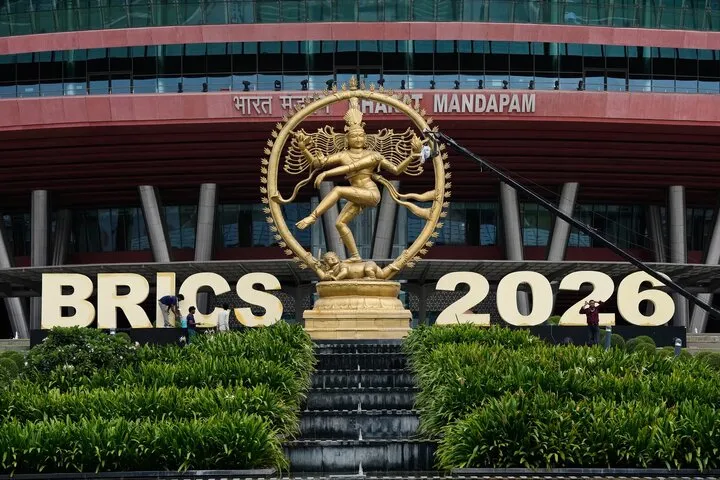
Tehran - BORNA - More than two decades have passed since the initial idea behind BRICS took shape. The group, encompassing more than 40 percent of the world's population and close to a quarter of the global economy, is now among the most significant gatherings of countries outside the traditional power blocs and claims to be expanding the Global South's role in international decision-making. Yet the 18th BRICS summit, held Sept. 12-13 in New Delhi, once again exposed the gap between the bloc's material capacity and its ability to translate that capacity into coherent political power.
At the summit, Russian President Vladimir Putin and Chinese President Xi Jinping spoke of BRICS's role in shaping a multipolar order and increasing the weight of the Global South. Xi called for BRICS to become an "active, stabilizing and positive" force in international affairs, while Putin described the bloc as one of the significant forces in the evolution of the international system. The New Delhi declaration likewise emphasized reform of global governance structures, stronger economic and financial cooperation, and a greater role for developing countries.
Behind these statements, however, an old problem persists: despite its considerable economic, demographic and natural-resource power, BRICS has still not managed to convert this material strength into a collective will backed by decision-making mechanisms and shared instruments. The bloc's central challenge is not, in fact, a shortage of power, but disagreement over how to use the capacities its members already possess.
What is BRICS supposed to be?
The first obstacle to BRICS becoming a pole of power lies in its members' disagreement over the group's nature and function. BRICS is not a military pact or a political union. It has no founding treaty, no independent budget and no permanent secretariat, and decisions are made by consensus among members. Membership therefore does not oblige countries to align their foreign policies with one another. This flexibility made it possible, in the group's early years, to bring together countries with divergent interests — but now that BRICS seeks a larger political role, that same flexibility has made maintaining consensus more difficult.
Nor is there agreement among members on the bloc's role in the international order. Iran and Russia would like BRICS's capacity turned into an instrument for countering Washington's pressure and Western unilateralism. China also supports a multipolar international system and a greater role for the Global South, while simultaneously emphasizing economic cooperation and opposition to bloc confrontation. India and Brazil, by contrast, view BRICS primarily as a platform for increasing the weight of developing countries, reforming international institutions and diversifying their own foreign relations, and have no appetite for turning the group into an anti-Western front.
These differing perspectives were on display in New Delhi as well. Xi, while stressing multipolarity, called for BRICS to move away from Cold War thinking and bloc confrontation, and Indian Prime Minister Narendra Modi has likewise stressed that the group must not become a coalition against any particular country or group. The issue, then, is not simply members' critical view of American hegemony; they have yet to agree on how far BRICS should go in confronting Washington and the Western order — or even on arriving at a single shared vision and objective in practice and implementation.
China and India: rivalry at the heart of the bloc
This divide is most apparent in the China-India relationship. As key BRICS members, the two countries are also rivals, and their relations deteriorated sharply after the 2020 border clash. Although the two reached an agreement in 2024 to reduce tensions and withdraw forces from certain disputed points, border disputes, trade imbalances and political mistrust persist.
Against this backdrop, Xi's visit to India for the BRICS summit carried particular significance. It was the Chinese president's first trip to India in seven years, and his meeting with Modi came as the two countries work to manage their border disputes and rebuild economic ties. The meeting addressed issues including border peace, expanding trade relations, market access and trade imbalances.
The significance of this meeting for BRICS is not limited to bilateral China-India relations. China and India are the two largest economies within the bloc, and their disagreement or cooperation directly affects the group's ability to advance economic and political initiatives. India does not want BRICS to become an instrument for expanding Chinese influence, and simultaneously maintains extensive security and economic ties with the United States; China, for its part, seeks expanded BRICS economic cooperation and a greater role for the bloc in international financial and trade structures.
The cautious rapprochement between Beijing and New Delhi may therefore help manage one of the most significant internal divides within BRICS — but it is certainly too early to say the rivalry between the two countries is nearing an end, or that there is firm ground for optimism.
Russia and Brazil: differing readings of the global order
This duality is not confined to Beijing and New Delhi. Russia, following its comprehensive confrontation with the West and the United States, sees BRICS as a vehicle for accelerating the transition to a multipolar order and reducing dependence on US-dominated mechanisms, and supports expanding trade in national currencies, establishing independent payment systems and increasing political coordination among members.
Brazil, on the other hand, while advocating reform of global governance structures, does not pursue this path with Russia's intensity or orientation. Brasília does not view BRICS as a hard geopolitical front against the West, but rather as an instrument for strengthening its own bargaining power vis-à-vis Western countries, particularly the United States. The difference between these two approaches is among the constraints preventing BRICS from becoming a cohesive political bloc.
The Iran-US war: a field test of convergence
The recent war between the United States and Iran turned these theoretical disagreements into a real-world crisis. The confrontation between one official BRICS member — Iran — and Washington, at a time when another core member of the bloc, the United Arab Emirates, maintains strategic defense ties with the United States and, during the Ramadan war, openly and covertly joined the aggressive war waged by the Israeli regime and the US against Iran, confronted BRICS with a new crisis.
At the September summit, despite the meeting between Iranian President Masoud Pezeshkian and Abu Dhabi Crown Prince Khaled bin Mohamed bin Zayed Al Nahyan on the sidelines of the leaders' session, the language used about the war in the summit's joint declaration was decidedly cautious.
The declaration, while emphasizing "maximum restraint" and diplomatic solutions, refrained from directly naming the parties to the conflict or assigning blame. This approach demonstrated that the closer a crisis comes to members' vital security interests, the narrower the scope of consensus within BRICS becomes and the greater the challenges it faces. At the BRICS foreign ministers' meeting in May as well, ministers were unable to agree on a joint statement, and India ultimately settled for issuing only a "chair's statement."
Expansion: more weight, harder coordination
The accession of new members such as Iran, the UAE, Egypt, Ethiopia and Indonesia, while enhancing the bloc's demographic and economic weight, has also multiplied the divergent national interests and priorities within it. In a structure where decisions are made by consensus, an increase in the number of members makes reaching common language at sensitive moments more difficult.
The distance between de-dollarization and building a real instrument
In the economic sphere too, a considerable gap is visible between stated objectives and the actual level of convergence among members. The discussion of reducing dependence on the dollar has become one of the central themes of BRICS cooperation in recent years, but the New Delhi declaration showed that members are still pursuing the gradual creation of payment and settlement mechanisms — and that, despite the speculation, the creation of a common currency is not on the group's agenda.
In the New Delhi declaration, members welcomed the BRICS Payment Task Force's efforts to find practical solutions for cross-border payments and emphasized examining interoperability between payment and messaging channels, increasing the use of local currencies in trade and investment, and respecting national priorities. The text of the declaration also makes clear that there is no single solution applicable to all members. Under these circumstances, the 18th BRICS summit demonstrated that the group's challenge is not proving its economic and demographic capacity; the central issue is that members have yet to show how far they are prepared to deploy and operationalize part of that capacity in the form of joint decisions, financial mechanisms and coordinated political positions.
Accordingly, until BRICS member states reach consensus on shared mechanisms in sensitive and critical areas — economic ones above all — the bloc and its members will not be able to convert its potential capabilities into actual ones.
End Article