Chinese humanoid robots powered by Nvidia’s new AI brain
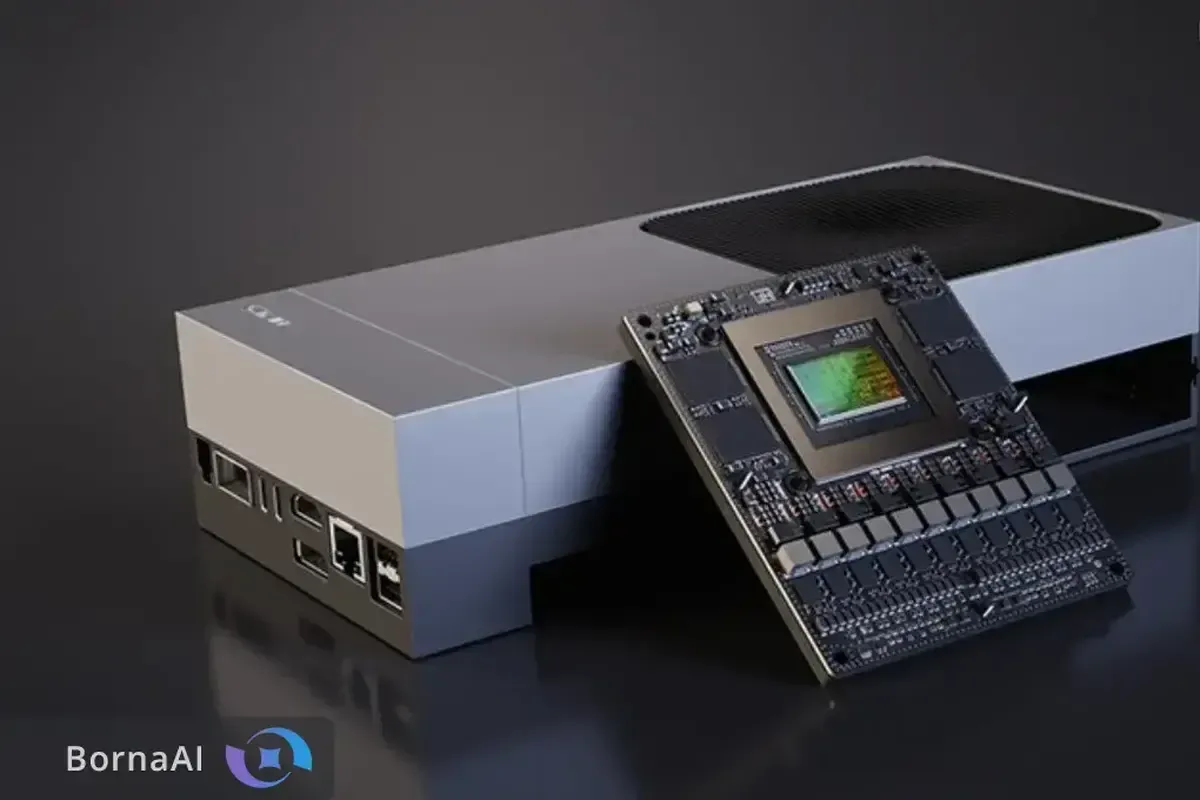
Tehran - BORNA - According to the South China Morning Post, the new Jetson AGX Thor development kit and production modules were recently introduced by Nvidia. Designed to empower robots across industries ranging from manufacturing and logistics to healthcare, agriculture, transportation, and retail, the system enables real-time interaction between robots and humans.
Built on Nvidia’s Blackwell GPU architecture, Jetson Thor features 128 gigabytes of memory and delivers a staggering 2,070 teraFLOPS of FP4 computing power — sufficient to run the most advanced AI models. The FP4 format, newly introduced with Blackwell, reduces computational demands for both AI training and inference, all within a 130-watt power envelope.
Wang Xingxing, founder and CEO of Unitree Robotics, hailed the breakthrough: “Jetson Thor creates a major leap in computing power, allowing robots to move more nimbly, make faster decisions, and achieve higher levels of autonomy,” he said in a statement released by Nvidia.
Early adopters of Jetson Thor in China include Unitree Robotics, AgiBot, Galbot, Engine AI, and UBTech Robotics. Their humanoid robots are expected to leverage the new platform to enhance motion control, perception, and interactive capabilities, making them more practical for large-scale deployment in real-world environments.
Industry analysts note that Nvidia’s expansion into China’s humanoid robotics sector demonstrates the U.S. semiconductor giant’s continued commitment to the Chinese market, despite ongoing geopolitical frictions and a widening technology rivalry between Washington and Beijing. The rollout comes as China raises concerns about U.S. export controls on advanced chips such as Nvidia’s H20.
Nvidia’s move highlights the growing intersection between artificial intelligence and robotics, where breakthroughs in chip design are seen as key to unlocking commercial viability. The adoption of Jetson Thor by top Chinese firms suggests an intensifying competition not only between nations but also within global robotics supply chains.
End Article