Doha Summit: Show of Power or Exercise of Power?
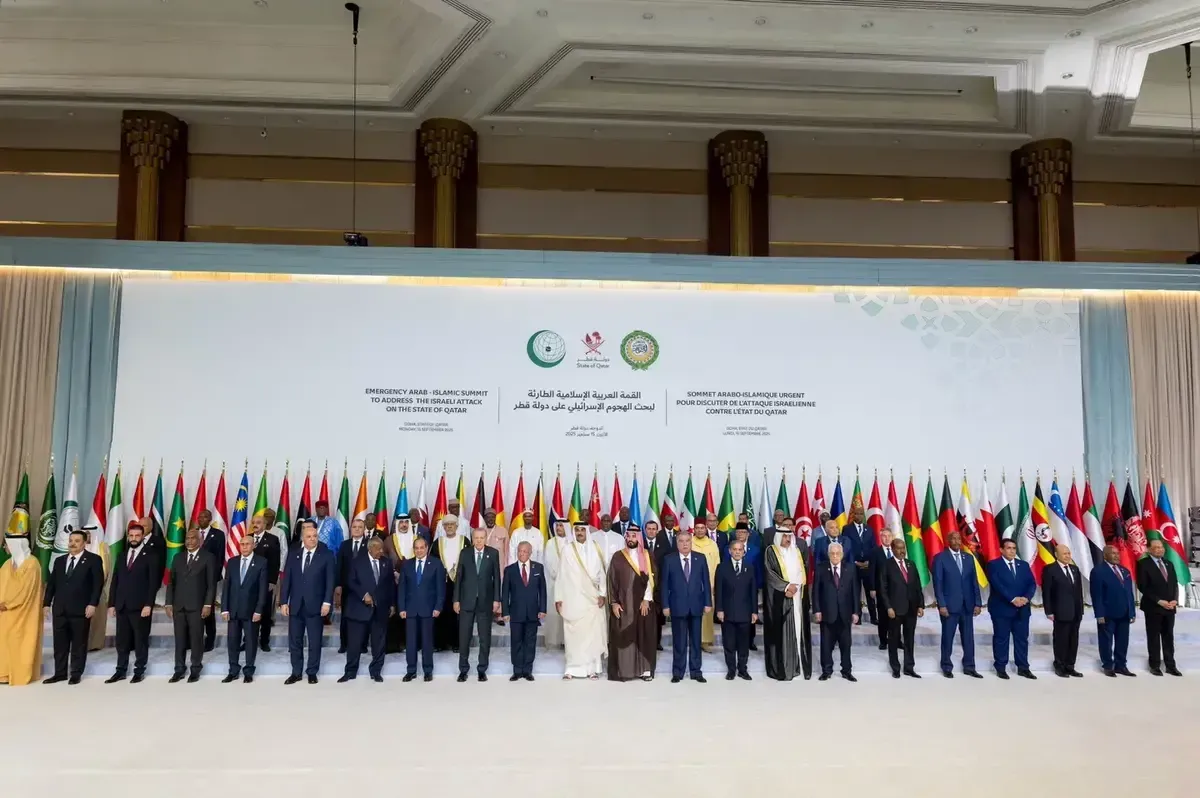
Jalal Khosh-Chehre, the editorial chief of Borna News Agency wrote: One might imagine that this is the moment for leaders of Islamic and Arab states to demonstrate their resolve. They gathered in Doha, the Qatari capital, for an emergency summit to deliver the swiftest and strongest protest against Israel’s terrorist assault on Qatar’s sovereignty. But will they? Or will the gap between a mere “show of power” and the actual “exercise of power” remain?
The Israeli air force’s strike on Doha, targeting Hamas leaders in the capital of one of Washington’s closest allies, stunned the world. This act of aggression has cast doubt on the very essence of “unity,” “alliances,” and security agreements between Washington and its Gulf Arab partners, and indeed with the wider international community. The pressing question now for all nations closely tied to Washington is this: what is the real ceiling of U.S. support when a security crisis erupts? Should Arab states of the Gulf expect to feel the same disappointment with Washington’s backing as Europe did in the course of the Ukraine war? Does Israel’s military action inside Qatari territory—beside the largest U.S. base in the country—not mean that Washington has granted Prime Minister Benjamin Netanyahu such impunity that, as some politicians put it, it is akin to “unleashing a rabid beast into the jungle of politics”? The visit of Trump administration Secretary of State Mark Rubio to Israel, and his explicit endorsement of Tel Aviv’s military-political strategy to keep the embers of war alive in the Middle East, only reinforces the perception that the U.S.-Israel preference remains the destabilization of the region.
Against this backdrop, what can really be expected from the closing statement of the Doha summit? Will it amount only to the usual “show of power,” vague rhetoric, and traditional declarations? Or will there truly be a show of will to alter the process designed to cement Israel as the hegemonic force of the region? Can the strategic security and economic interests—and indeed the territorial integrity—of Arab and Islamic states coexist with the trajectory set by the Washington–Tel Aviv alliance?
Since October 7, 2023, Israel’s strategy has followed a single maxim: “sow chaos, reap reward.” Tel Aviv’s audacity relies above all on the cover provided by Washington. The Arab states, particularly in the southern Gulf, must now ask themselves: if the U.S., despite its vast military footprint in the region, is unwilling to shield them in critical security moments, then what is the value of alliance with it?
The deeper problem is the scope of Arab and Islamic governments’ courage. Not long ago, the Palestinian cause was the emblem of Arab-Islamic identity against Tel Aviv’s aggression. Today, many of those same states count among Washington and Tel Aviv’s commercial partners or military allies. This reality has fostered caution and conservatism, at the expense of the resolve to “exercise power.” The pride of the Islamic world has been battered for decades under the blows of this alliance. The devastation of Gaza and the displacement of millions of Palestinians have provoked little beyond risk-averse gestures. Endless conferences and hollow communiqués have never forced Israel to retreat from its aggressive posture—and they never will. Proposing vague formulas only underscores that summits like Doha’s may still lack the determination to test true power against Israeli aggression.
What matters is avoiding chaotic, reactive, and strategy-less responses to Tel Aviv’s adventurism and Washington’s direct support. The Doha summit is a test of mettle for Muslim and Arab states, a chance to prove that empty reassurances from Washington and Tel Aviv cannot suffice while the threat endures.
Is it not time for Islamic and Arab governments to demonstrate their courage against Israel’s bid for regional hegemony? Or will complacency once again prevail?
End Article