All About Trump's Plan: Ukraine Faces Its Toughest Winter and a Major Dilemma
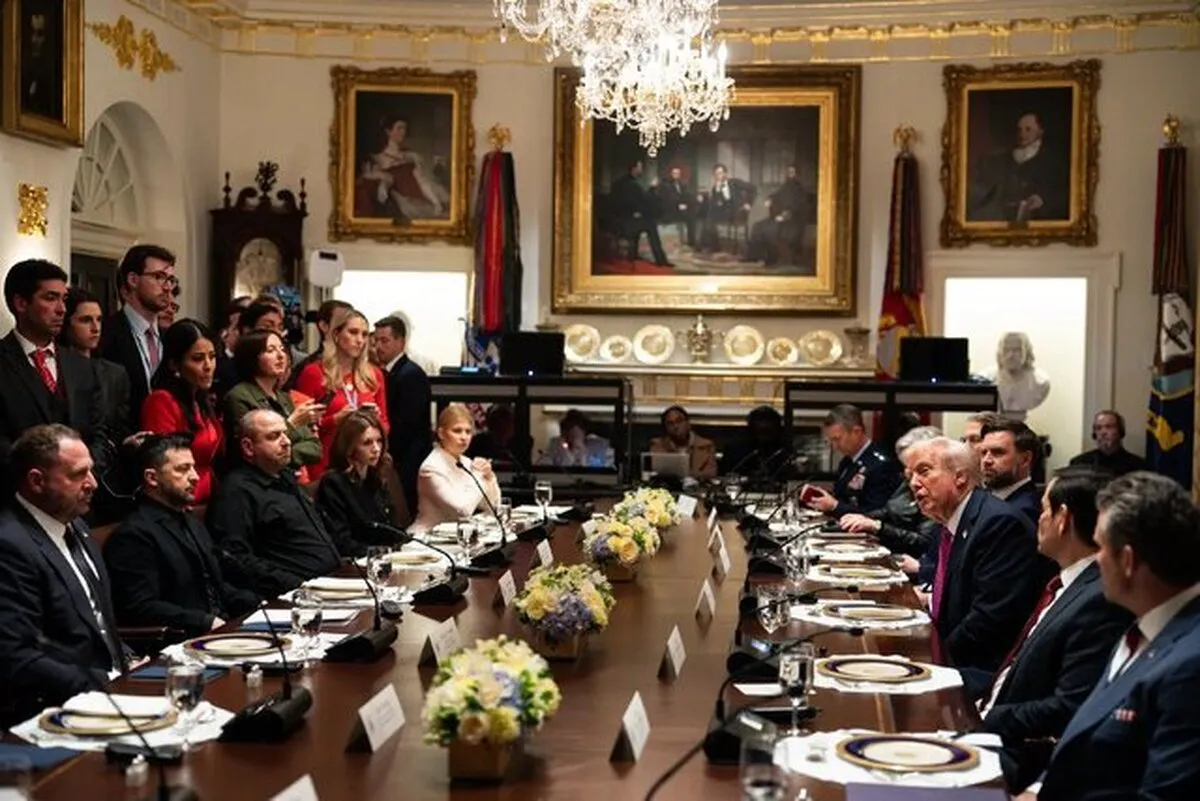
Tehran - BORNA - As the bloody war between Russia and Ukraine enters its fifth year, US President Donald Trump has launched new efforts to end the crisis. He has repeatedly confessed that he initially believed his friendly and close relationship with Russian President Vladimir Putin would allow him to quickly end the war, but he has failed to achieve this goal.
Nevertheless, one of Trump's latest efforts is the 28-point peace plan, presented as a proposed framework for a ceasefire and long-term resolution of the crisis. The plan, the details of which were leaked in November 2025, is described by media reports as a "mix of major concessions to Russia, security guarantees for Ukraine, and geopolitical changes in Europe." However, the plan, reportedly drafted without direct consultation with Ukraine or its European allies, faces serious opposition.
The Origin of the Plan
The idea of peace in Ukraine for Trump originated during his 2024 election campaign. Trump repeatedly claimed the war would not have happened if he were president, and he asserted he could end the conflict in 24 hours—a goal he has yet to meet. Trump previously proposed and advanced a 20-point plan for Gaza, and is now attempting to duplicate this framework for Ukraine.
According to Politico, the 28-point peace plan is the result of hidden negotiations between Steve Witkoff, Trump’s special representative, and Kirill Dmitriev, a close advisor to Putin and head of the Russian Direct Investment Fund. These talks began in late October 2025 in Miami and lasted about a month, without official notification to Kyiv or Washington's European allies. Reports indicate that Witkoff drafted the plan with assistance from US Secretary of State Marco Rubio and Trump's son-in-law, Jared Kushner.
On Thursday, US Secretary of the Army Dan Driscoll personally presented the plan to Ukrainian President Volodymyr Zelensky in Kyiv. Trump then threatened Kyiv with aid cuts, setting a Thanksgiving deadline (November 27) for accepting the plan's general framework.
Key Provisions of the 28-Point Plan
The 28-point plan is divided into four main categories: Peace in Ukraine, Security Guarantees, European Security, and Future US-Russia-Ukraine Relations. The full text of the plan was published on Telegram by an opposition Ukrainian representative and then circulated in the media.
The key points include:
Territorial Status: Crimea, Luhansk, and Donetsk are to be recognized as de facto Russian (with US recognition). Kherson and Zaporizhzhia remain along the current contact line. Russia would withdraw from other areas it controls outside of these five regions. Ukrainian forces would withdraw from the segment of Donetsk currently under their control, which would become a neutral demilitarized buffer zone belonging to the Russian Federation (Russian forces would not enter).
Security Guarantees: Ukraine's sovereignty is fully affirmed. Ukraine is to receive credible security guarantees. The US security guarantee is conditional, requiring payment, and would be canceled if Ukraine attacks Russia or fires missiles at Moscow or St. Petersburg without reason.
NATO and Non-Aggression: A Comprehensive Non-Aggression Pact would be signed between Russia, Ukraine, and Europe, resolving all past ambiguities and disputes. Russia is expected not to attack neighboring countries, and NATO would cease expansion. Ukraine is required to enshrine permanent non-alignment with NATO in its constitution, and NATO must state in its documents that Ukraine will never be accepted. NATO pledges not to deploy forces on Ukrainian soil.
International Relations and Reconstruction: Russia would return to the global economy with the phased lifting of sanctions, long-term US-Russia economic cooperation agreements, and an invitation back to the G8. $100 billion of frozen Russian assets would be used for Ukraine's reconstruction (with the US taking 50% of the profit), and Europe would add an extra $100 billion. The remaining assets would be invested in a joint US-Russia fund.
Peace and Oversight: A comprehensive ceasefire would be implemented immediately upon signing the Memorandum of Understanding. A "Peace Council" chaired by Donald Trump would oversee the legally binding agreement. A full general amnesty would be established for all parties, and Ukraine would hold elections within 100 days.
Ukrainian and European Reactions
Zelensky, who previously rejected any territorial concessions, stated on Thursday via a Telegram video: "Ukraine is going through one of the most difficult moments in its history—we either lose our dignity or our key partner; either 28 difficult points or the toughest winter we have ever had." He, however, said he would consult with Trump in the coming days and work with the UK, France, and Germany on an "alternative proposal." Zelensky assured that he "will not betray Ukraine," and will present alternative proposals to avoid giving the enemy an excuse to claim Ukraine does not want peace.
European nations, which annually provide over €50 billion in aid to Ukraine, were surprised and angered by Trump's plan. Kaja Kallas, the EU High Representative for Foreign Affairs, stated that any successful peace plan "must proceed with the involvement of Ukraine and the Europeans," and that "pressure must be on the aggressor, not the victim. Rewarding aggression only leads to more aggression." Ursula von der Leyen, President of the European Commission, has promised an "alternative proposal" to preserve Ukraine's sovereignty.
European leaders, including French President Emmanuel Macron and German Chancellor Olaf Scholz, issued a joint statement with Zelensky, emphasizing that "any agreement requires the consensus of NATO and Europe," and assured Zelensky of "full and unwavering support on the path to a lasting and just peace." Conversely, Hungarian Prime Minister Viktor Orbán supported the plan. Polish and Baltic officials, however, called it an "encouragement for Putin's next aggression against NATO." European diplomats described the plan as a means to impose a "bad deal" on Ukraine, with one senior official warning that if Russia is let off the hook, "the issue will not just be Ukraine; it means the likelihood of more Russian attacks, even against EU and NATO members."
US and Russian Positions
President Trump defended his plan as "powerful," telling Fox News that Ukraine must agree to it by Thanksgiving, or aid will be cut. He reiterated that Zelensky is forced to accept the plan because he lacks leverage. White House Press Secretary Karoline Leavitt claimed the plan "provides full guarantees for Ukraine, Europe, and Russia," arguing that both sides "gain more than they give." Republican Senators, however, expressed reservations, with Lindsey Graham calling the pressure on Kyiv without consultation "a mistake," and Pete Ricketts warning that the plan is "palliative" and could lead to instability.
From Moscow, Putin offered cautious approval on Friday, stating that the plan "could be the basis for final peace," but noted that "we have not yet reviewed the details and have not had a substantive discussion." He emphasized that Russia remains open to peaceful negotiations but stressed the importance of "non-expansion of NATO" and the "lifting of sanctions".
The Outlook
Amid shifting battlefield developments in favor of Russia on Ukraine's eastern and northern fronts, the situation for Ukrainians has become harder than ever. Western media outlets have labeled Trump's 28-point plan as a framework for the "surrender of Kyiv," rather than a "just peace." With Trump's Thanksgiving deadline looming, pressure on Zelensky is mounting. However, without fundamental changes to the plan, such as preserving Ukraine's territorial integrity, it is unlikely that Europe and Kyiv will accept it. The core question remains whether the Europeans can sustain the war on their own should Kyiv ultimately refuse the US demands. Western officials warn that the plan not only challenges Ukraine’s future but also the security of NATO, with some suggesting Trump is sacrificing Ukraine to secure a Nobel Peace Prize.
End Article