Khaleda Zia, Bangladesh’s first female prime minister, dies at 80
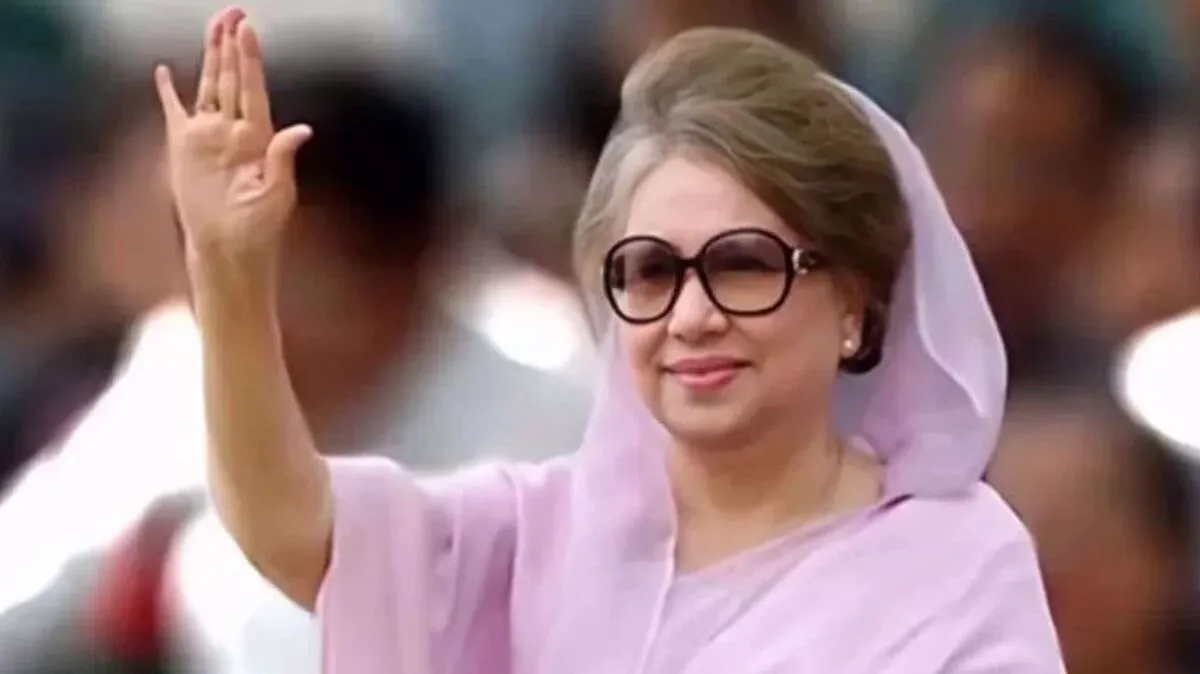
Tehran - BORNA - “The BNP chairperson and former prime minister, the national leader Begum Khaleda Zia, passed away today at 6:00 am, just after the Fajr (dawn) prayer,” the Bangladesh Nationalist Party (BNP) said in a statement on Tuesday.
“We pray for the forgiveness of her soul and request everyone to offer prayers for her departed soul,” it added.
Her death marked the end of an era defined by her fierce rivalry with Sheikh Hasina and her enduring role as a symbol of opposition and resilience.
Born on August 15, 1945, in Jalpaiguri (then in British India, now in West Bengal), Khaleda Zia grew up in a middle-class family.
She married Ziaur Rahman, a decorated army officer and key figure in Bangladesh's 1971 Liberation War, in 1960. Initially leading a private life as a homemaker, she entered the public eye when her husband declared Bangladesh's independence and later became president in 1977, founding the BNP.
Tragedy struck in 1981 when President Ziaur Rahman was assassinated in a military coup attempt. Thrust into leadership, Khaleda Zia assumed the chairmanship of the BNP in 1984.
She played a pivotal role in the pro-democracy movement against military dictator Hussain Muhammad Ershad, forging alliances and enduring house arrests. Her efforts contributed to Ershad's ouster in 1990, paving the way for democratic elections.
In 1991, Khaleda Zia led the BNP to victory, becoming Bangladesh's first female prime minister (and the second in the Muslim world after Pakistan's Benazir Bhutto).
Her government focused on economic liberalization, infrastructure development, and strengthening ties with international partners. She served until 1996, when her party lost to Sheikh Hasina's Awami League.
Returning to power in 2001 after forming a four-party alliance, Khaleda Zia served a second full term until 2006. This period saw economic growth but was marred by political violence and allegations of corruption. Her tenure ended amid controversy, leading to a caretaker government.
The defining feature of Khaleda Zia's career was her intense rivalry with Sheikh Hasina, often referred to as the "Battle of the Begums." The two women, leading dynastic parties, the BNP and the Awami League, alternated power, embodying deep ideological divides rooted in interpretations of Bangladesh's founding history.
After 2006, Khaleda Zia faced multiple corruption charges, which she and her supporters described as politically motivated. Convicted in 2018, she spent years in prison or under house arrest during Hasina's long rule.
Following a student-led uprising that ousted Hasina in 2024, Khaleda Zia was released, and charges were progressively dropped.
By January 2025, the Supreme Court acquitted her in the final case, clearing her path for a potential political comeback.
She returned from medical treatment in the UK in May 2025 and, despite frail health, vowed in November to campaign for the February 2026 elections, positioning the BNP as a frontrunner.
Khaleda Zia's health had long been precarious, plagued by conditions including advanced liver cirrhosis, diabetes, heart disease, kidney issues, and arthritis.
Hospitalized in late November 2025 at Evercare Hospital in Dhaka, her condition deteriorated rapidly.
Interim leader Muhammad Yunus called for national prayers, describing her as an "inspiration."
She passed away shortly after dawn prayers on December 30, surrounded by family, including her son Tarique Rahman.
Khaleda Zia is celebrated as a trailblazer for women in politics and a champion of democracy, yet criticized for governance challenges.
Her life mirrored Bangladesh's turbulent journey, from independence struggles to democratic aspirations, and her passing closes a chapter in the nation's storied political saga.
End Article