Ulyanov Criticizes Western Hypocrisy on Diplomacy with Iran
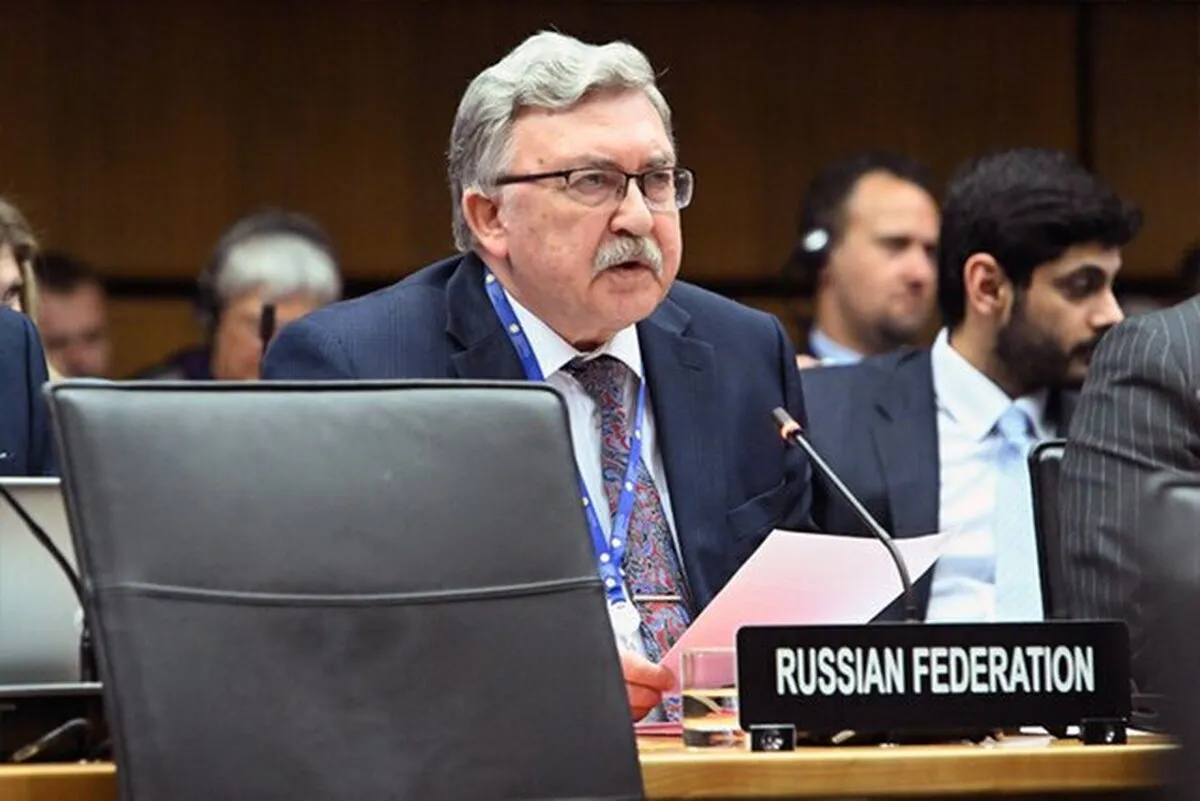
Tehran - BORNA - Mikhail Ulyanov, Russia's Permanent Representative to International Organizations in Vienna, believes the situation surrounding Iran's nuclear file has reached a "complete deadlock," and the responsibility for this lies with the three European countries—Britain, Germany, and France—and the United States.
Ulyanov, speaking to RIA Novosti on Friday, emphasized that the consequences of the anti-Iran resolution adopted by the International Atomic Energy Agency (IAEA) Board of Governors will soon become apparent.
The IAEA Board of Governors adopted a resolution on Thursday, initiated by the European Troika and the US, which obligates Iran to immediately report the status of its enriched uranium reserves and nuclear facilities to the Agency.
Reza Najafi, Iran's Permanent Representative to International Organizations in Vienna, called the resolution "non-constructive and political." Seyed Abbas Araghchi, Iran's Foreign Minister, also announced that following this event, the Cairo Understanding—an agreement signed on September 9th of this year regarding the access of inspectors to Iran's nuclear facilities—is considered terminated.
Russia's Representative in Vienna further added: "Western countries constantly repeat that this is not the end of diplomacy, but it seems that their efforts have practically stalled diplomacy."
He stressed that such resolutions are adopted when diplomacy is no longer effective, and the result is "very far from real politics."
Ulyanov also stated that Russia would currently refrain from presenting any initiatives regarding the Iranian file. The Russian diplomat explained: "Before we present an initiative, we must know what situation we are in. We have reached a deadlock—or rather, we have been dragged into this deadlock. We need to examine the conditions and then decide what should be done and how to proceed."
Previously, Kazem Gharibabadi, Iran's Deputy Foreign Minister, told ISNA: "The main question is that Iran has had extensive cooperation with the Agency, and we even had the Cairo Understanding after the attack, and access was granted to the undamaged facilities. Where does this stand in political interactions, and did the Westerners welcome this cooperation? The answer is negative. This shows they are not seeking cooperation and interaction between Iran and the Agency."
The senior Iranian diplomat concluded: "They have defined political goals for themselves and seek to apply pressure. Iran's engagement with the Agency, the modality, and the implementation of safeguards are also unimportant to them. If this is the case, the Islamic Republic of Iran will naturally review its approaches after the resolution is issued."
End Article