Ghalibaf-Led Iranian Delegation Meets Pakistani PM in Islamabad Ahead of Potential US Talks
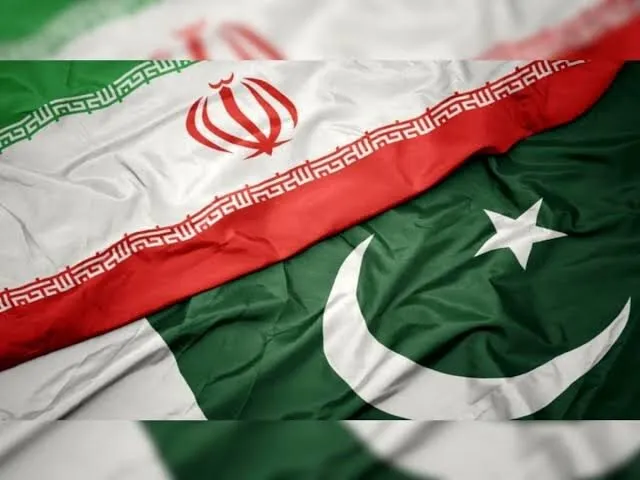
Tehran - BORNA - The Iranian team—mandated by the Supreme National Security Council and the country’s leadership to conduct negotiations with the American side—arrived in Islamabad early Saturday. Upon their arrival at the Nur Khan Airbase, the delegation was officially welcomed by the Pakistani Foreign Minister and the Chief of Army Staff (COAS).
The meeting at the Prime Minister’s House included Iranian Foreign Minister Seyed Abbas Araghchi, marking the formal start of a high-stakes diplomatic mission aimed at resolving the conflict following 40 days of intense hostilities.
The Three-Stage Diplomatic Roadmap
The Islamabad negotiations are structured to proceed in three distinct phases, facilitated by Pakistan as the primary mediator:
Preliminary Phase: Prime Minister Shehbaz Sharif will hold separate, bilateral meetings with both the Iranian and American delegations to bridge initial gaps.
First Phase: Indirect negotiations will commence, with Pakistan acting as the shuttle diplomacy channel to exchange demands and positions between the two sides.
Second Phase: Should the first phase yield constructive progress, the process will transition into direct, face-to-face negotiations between the Iranian and U.S. representatives.
Talks are scheduled to take place at the Serena Hotel in Islamabad. While a definitive format (direct or indirect) for the core sessions has not been finalized, the outcome of the preliminary meetings is expected to dictate the next steps.
High-Level Iranian & U.S. Delegations
The composition of the Iranian team reflects a strategic "integrated diplomacy" approach, involving 26 technical and specialized experts in economic, security, and political fields. Key members accompanying Ghalibaf include:
Seyed Abbas Araghchi (Foreign Minister)
Ali Akbar Ahmadian (Secretary of the Supreme National Defense Council & Lead of the Military Committee)
Abdolnaser Hemmati (Governor of the Central Bank & Lead of the Economic Committee)
Kazem Gharibabadi (Deputy Foreign Minister & Lead of the Legal Delegation)
Majid Takht-Ravanchi (Deputy Foreign Minister)
Ali Bagheri Kani (Deputy for Foreign Policy at the SNSC)
On the American side, the delegation is led by Vice President J.D. Vance, accompanied by senior advisors Jared Kushner and Steve Witkoff, along with a large team of experts.
The 10-Point Peace Framework
The negotiations come after the United States reportedly accepted Iran’s 10-point proposal as the basis for a temporary two-week ceasefire. These conditions include:
Non-aggression guarantee.
Continued Iranian control over the Strait of Hormuz.
Acceptance of Iran's enrichment rights.
Removal of all primary sanctions.
Removal of all secondary sanctions.
Termination of all UN Security Council resolutions.
Termination of all Board of Governors (IAEA) resolutions.
Payment of war reparations to Iran.
Withdrawal of U.S. combat forces from the region.
Cessation of war on all fronts, including against the Lebanese Resistance.
Stance on Lebanon and Mistrust of Washington
A major point of contention remains the Israeli regime's refusal to halt attacks on Lebanon. Iran has criticized this exclusion, emphasizing that a cessation of hostilities against Hezbollah and the Lebanese people is a non-negotiable prerequisite for entering the main phase of talks.
Upon his arrival, Mohammad Bagher Ghalibaf expressed deep skepticism regarding U.S. intentions. "Our experience with the Americans has always been marked by failure and broken promises. Twice in less than a year, they attacked us in the middle of negotiations despite our good faith," he told reporters. "We have good faith, but zero trust. If they seek a real agreement and recognize the rights of the Iranian nation, they will see readiness from our side. However, if they intend to use these talks for a 'deceptive show,' we are fully prepared to secure our rights through our own might."
Prime Minister Shehbaz Sharif, in a televised address on Friday night, described the talks as "decisive," stating that the delegations will either succeed or fail in reaching a lasting settlement. He emphasized that hosting these negotiations is a "moment of pride" for Pakistan and the entire Islamic world.
End Article