Baghaei: No Definitive Decision Yet on Participating in Pakistan Talks
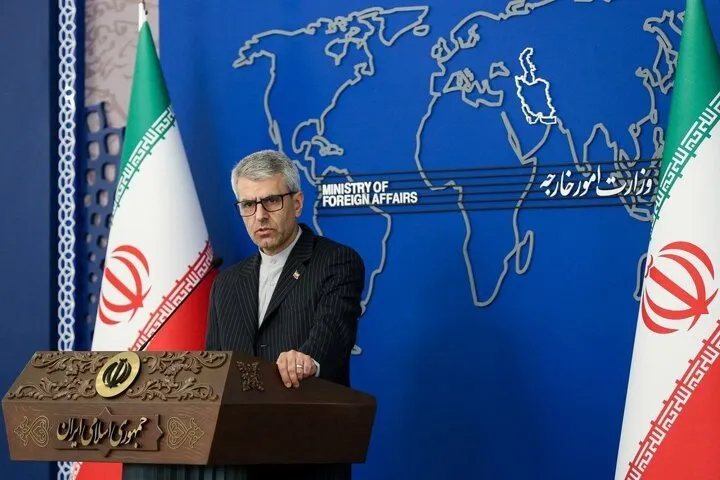
Tehran - BORNA - Esmaeil Baghaei, in an interview regarding the latest status of negotiations between Iran and the United States mediated by Pakistan, said: "A definitive decision on whether to participate or not participate in the Pakistan talks has not been made yet."
The senior Iranian diplomat pointed out that this situation is not due to indecisiveness, stating: "The reason is the contradictory messages, inconsistent behaviors, and unacceptable actions of the American side."
The spokesperson for the Iranian Ministry of Foreign Affairs, in part of his remarks, raised the question: "Was it us who violated the JCPOA agreement and withdrew?" He added: "Let us not forget that in 2018, when the U.S. withdrew, we fully implemented the JCPOA for one year, and after that year, we gradually—meaning every two months—reduced some of our commitments. This indicates a responsible approach and commitment to obligations on our part."
In response to the question of what logic allows for hope that attending the next round of talks will yield results given repeated U.S. violations of the ceasefire, he stated: "Firstly, the assault on shipping and free trade in the seas is a very dangerous violation because if this becomes a precedent, the very foundation of freedom of navigation will be endangered. These actions taken by the United States are a form of state and maritime piracy. When we put these points together, the intent and seriousness of the U.S. come into question."
Referring to the process of how the Islamabad talks were formed and Iran's participation in the first round, the spokesperson added: "At one point, mediators intervened, and dialogue took place, which I believe was a very brave decision. This once again shows that the approach of the Islamic Republic of Iran is responsible; whenever it determines that entering a diplomatic process is necessary and secures national interests and goals—for whatever reason and considering the overall circumstances—it takes steps in that direction."
The spokesperson for the Iranian Ministry of Foreign Affairs, in the continuation of this interview broadcast on the News Channel (Shabake Khabar), criticized the U.S. performance and announced that Tehran has faced a series of "unacceptable" behaviors from Washington in recent weeks.
Referring to the recent ceasefire agreement, he said: "From the very beginning, we faced a clear violation of U.S. commitments because the ceasefire in Lebanon was supposed to be part of the agreement, but the American side did not remain committed to it."
The spokesperson for the Ministry of Foreign Affairs added: "The Prime Minister of Pakistan had also explicitly stated this in the initial statement related to the ceasefire, and after the negotiations held in Islamabad, it was agreed that the other side would fulfill its commitments."
According to him, within the framework of the understanding reached on April 8 (19 Farvardin), the Iranian Foreign Minister also announced in a message that Tehran would implement its commitments, but the U.S. response was the continuation of the naval blockade.
He emphasized: "According to international law, a naval blockade is an illegal act and a clear violation of the ceasefire understanding. Also, according to the 1974 UN General Assembly resolution, the blockade of a country's ports and ships is considered an instance of aggression."
Referring to the assault on an Iranian commercial vessel, the spokesperson for the Ministry of Foreign Affairs said: "In addition to declaring a blockade, the U.S. has acted in practice against Iranian ships, and two vessels have been targeted."
He also addressed the issue of projection and blaming Iran, stating: "It is clear that the start of the war and military aggression was by the other side, and the repeated violation of commitments was also carried out by the same side."
The spokesperson for the Iranian Ministry of Foreign Affairs strongly criticized U.S. actions against Iranian shipping, describing them as a serious threat to the principle of freedom of navigation and free trade in international waters.
He said: "The assault on shipping and free trade in the seas is a very dangerous violation because if such a procedure becomes a precedent, the foundation of freedom of navigation in the world will face danger. These actions are examples of maritime piracy and state terrorism."
The spokesperson for the Ministry of Foreign Affairs added: "The collection of U.S. behaviors, including the assault on Iranian ships, seriously calls into question Washington's intention and seriousness."
Baghaei, referring to the aggressions of the U.S. and the Zionist regime against Iran, stated: "The United States and its allies caused significant damage to Iran during the conflicts; they martyred the Leader of Iran, the lives of a number of commanders and Iranian citizens were taken, and the country's assets were damaged, but they failed to achieve their goals."
He added in his remarks during this interview: "Whenever Iran reaches the conclusion that diplomacy secures national interests, it will take the appropriate decision."
In conclusion, the spokesperson for the Ministry of Foreign Affairs noted: "The people of Iran are the main backbone of the country and must know which parties they are facing; because the diplomatic claims of the U.S. are not consistent with its practical behaviors, and this issue must be made clear to the public opinion of the region and the world."
End Article