WSJ, NYT debunk Trump’s claims on postponing strikes against Iran
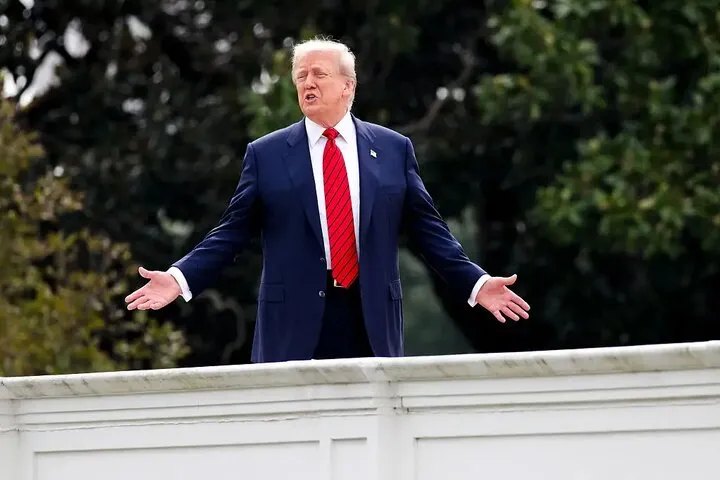
Tehran - BORNA - U.S. President Donald Trump issued a statement on his Truth Social platform late Monday, walking back his self-proclaimed military strike against Iran for the umpteenth time. This time, he claimed the decision was made at the request of the leaders of Saudi Arabia, the United Arab Emirates, and Qatar, under the pretext that serious negotiations with Iran are currently underway.
In his statement, Trump claimed: "Sheikh Tamim bin Hamad Al Thani, Emir of Qatar, Mohammed bin Salman Al Saud, Crown Prince of Saudi Arabia, and Mohammed bin Zayed Al Nahyan, President of the UAE, have asked me to postpone our planned military strike on the Islamic Republic of Iran, which was scheduled for tomorrow, because serious negotiations are ongoing."
Following Trump’s latest retreat from his self-proclaimed "imminent" military strike, numerous reports emerged exploring the actual motives behind this backpedal.
In this regard, The Wall Street Journal noted Trump’s assertion regarding the "request from regional leaders" and quoted Arab diplomatic sources who confirmed that these countries "were completely unaware of any plan for an imminent attack on Iran."
Concurrently, The New York Times cited Pentagon sources revealing that the real reason for the U.S. president's retreat was "Iran's high state of readiness to counter any new American aggression and the surging risk levels for any aerial operations near Iranian borders."
A U.S. military official also told the NYT that Iranian commanders have meticulously analyzed the flight patterns of American fighter jets and bombers, cracking their operational models. The official noted that the recent downing of a U.S. F-15E jet and the fire aboard an F-35 demonstrate that American flight tactics have become overly predictable, allowing Iran to defend against them with enhanced capabilities and foresight.
Regardless of the tactical drivers behind Trump's move, international analysts view the U.S. president's reliance on such pretexts—whether real or fabricated—as a significant strategic indicator.
Danny Citrinowicz, a prominent West Asian affairs analyst, emphasized that Trump’s retreat from the alleged strikes under the guise of "regional countries' requests" is a clear "sign of Iran’s successful deterrence vis-à-vis the Persian Gulf states."
"These countries have come to the stark realization that neither their own capabilities nor the military might of the United States can fully neutralize Iran's defensive response," Citrinowicz added.
End Article