Baghaei: No Negotiations Held with U.S. / UAE’s Prosperity Owes to Iranian Efforts and Wealth
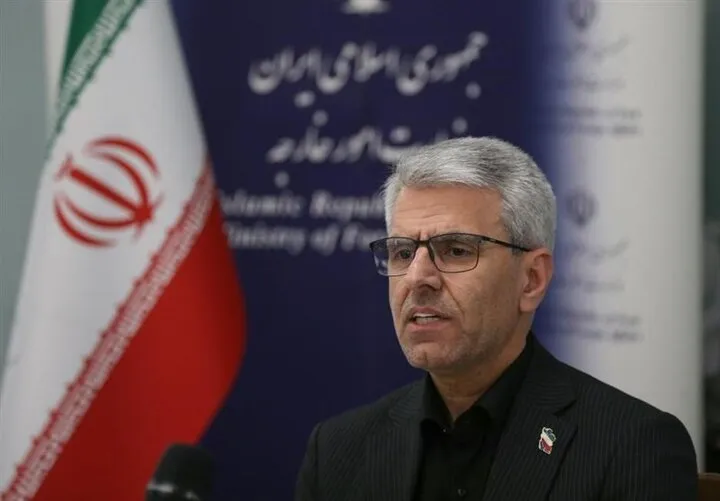
Tehran - BORNA - Baghaei, in his first press conference with domestic and foreign journalists in the year 1405, said: “We began the spring while Iran was under aggression by the Israeli regime and the United States. It has now been 31 days since the start of this war, and during this period the Iranian nation has shown that when its life and homeland are at stake, it will defend the country’s dignity and integrity with all its might.”
Human Rights the Biggest Victim of U.S.-Israeli War Against Iran
Stating that over the past month the most horrific crimes have been committed by the United States and the Israeli regime against the Iranian people, he said: “The greatest victim of the aggressive war by the United States and the Israeli regime against Iran has been humanitarian law and human rights. During this period, they have violated all human rights standards, and we have witnessed genocide, as well as attacks on Iran’s universities and cultural centers.”
Baghaei stressed that cultural centers in Iran—sites important to all Iranians and part of shared human heritage registered with UNESCO—have been targeted. He added: “They have attacked hospitals, Red Crescent buildings, and residential areas, all of which constitute war crimes. They have also targeted infrastructure on which our people depend for their daily lives.”
Praise for Power Ministry Engineers
He added: “On Sunday night, the enemies attacked power substations in Tehran and Karaj, causing outages in parts of these areas. We must commend the dedicated engineers and staff of the Ministry of Energy, who worked around the clock to keep Iran illuminated in the face of darkness and the malicious efforts of the enemy.”
Israeli Regime Targets Media Alongside War Crimes
Baghaei continued: “We are continuously documenting all these cases both for the historical record and for pursuit in international arenas, so that future generations will know that the enemies’ claims of helping the Iranian people were nothing but deception.”
Referring to repeated insults by the U.S. president toward the Iranian people, he said: “Alongside military aggression, we are also witnessing a media and cognitive war. They seek to prevent the truth from reaching the Iranian people and the global public, and within this framework they target journalists and media outlets.”
He added: “In this regard, yesterday we witnessed an attack by the Israeli regime on the office of Qatar’s Al-Araby network in Iran, which was severely damaged. The day before, we also witnessed a targeted Israeli attack on journalists from Al Mayadeen and Al Manar in Lebanon. This is a reality: alongside committing war crimes in Gaza and Lebanon, the Israeli regime specifically regards the media as an enemy.”
Iran’s Operations Target Bases Used for Aggression
In response to a question about continued U.S. attacks on Iran from the territory of some neighboring and regional countries, as well as statements by UAE officials, Baghaei said: “The reality is that we are and will remain neighbors with all countries in the region and the Persian Gulf, and prudence requires that we recognize that others may leave, but neighbors will remain for one another.”
He emphasized: “We have never considered regional countries as enemies and do not do so. We have repeatedly stated that Iran’s operations target bases that are the source of aggression against Iran.”
This Foreign Ministry official stressed that Iran’s position is logical and based on legitimate self-defense and ethical principles.
Referring to statements by some regional countries that they are not part of the war, he said: “Such statements are not sufficient. While we have welcomed these positions, in practice we see that the United States continuously uses its military bases in regional countries against Iran, and developments show that the territory of neighboring countries is being used—willingly or unwillingly—by the U.S. against Iran.”
He added: “Iran’s actions are defensive and do not constitute attacks on neighboring countries. Therefore, Iran’s defensive measures should not be interpreted as hostile acts. We call on regional countries to adhere to the principles of good neighborliness and not allow their territory to be misused.”
War Could Trigger Future Instability
Baghaei said: “This war is not only an attack on Iran; it can become a source of future instability. Countries should not expect Iran to exercise unilateral restraint. It was the United States and Israel that initiated this war and used the territory of regional countries to attack Iran.”
UAE’s Prosperity Owes to Iranian Efforts and Wealth
Regarding the UAE, he said: “It is a reality how much the UAE’s prosperity owes to Iranian manpower, Iranian efforts, and Iranian wealth. This is a fact, and in light of it, it is expected that UAE officials treat our compatriots with foresight.”
He concluded: “As the Foreign Ministry, we are obliged to support the rights of our nationals in different countries, including those in the Persian Gulf.”
On matters related to the war, senior officials make the decisions
The Foreign Ministry spokesman, in response to a question about what political solution exists alongside military measures to end the war, said: “At present, we are in a situation where all our focus must be on defending the country’s sovereignty, and whenever it becomes necessary to make decisions regarding this war and related issues, senior officials of the country will decide.”
He continued: “In recent days, the scale and intensity of U.S. and Israeli attacks against Iran have increased, and naturally in such conditions it is logical that all our focus be on defending the country’s sovereignty. The diplomatic apparatus, alongside the armed forces, is carrying out its duties in the field of diplomacy and raising awareness about these developments on the international stage, and is advancing these responsibilities.”
We have had no negotiations with the United States in recent times
The Foreign Ministry spokesman also, in response to a question regarding reports about mediation by some countries, including Pakistan, between Iran and the United States to end the war and whether Iran has responded to U.S. proposals, stated: “In recent times, we have had no negotiations with the United States. What has existed are messages conveyed by intermediaries, including Pakistan, indicating the U.S. desire for negotiations.”
Baghaei added: “When talk of negotiation and diplomacy is raised by the United States, there is a serious issue as to how credible and reliable such statements can be considered, given the prior record of the Americans in this regard. Unlike the other side, which continuously changes its position and shows contradictory behavior, our position is clear. Iran has clearly stated its stance from the outset and we know well what framework we have in mind and what we want.”
He emphasized: “What has been conveyed to us by the U.S. side through intermediaries consists of excessive, unrealistic, and illogical demands.”
Regional countries should be realistic in their assessments
Baghaei also referred to the quadrilateral meeting of the foreign ministers of Pakistan, Saudi Arabia, Egypt, and Turkey held on Sunday in Islamabad, saying: “Pakistan holds meetings with neighboring countries within a framework they themselves have defined, and we had no role in it. It is positive that regional countries are concerned about peace, but our request is that they be realistic in their assessments and consider who started the war. Everyone must bear in mind that Iran did not start this war and that for the second time we were attacked while in the midst of a diplomatic process.”
He stressed: “Our positions are clear, and whenever we reach a conclusion, we will convey it appropriately, because we know what we want and what is unacceptable to us.”
The Agency has so far failed to fulfill its duties
In response to a question about remarks by Grossi regarding Iran’s peaceful nuclear activities and his silence on attacks against Iran’s peaceful nuclear facilities, Baqaei said: “The actions carried out by the United States and the Zionist regime against Iran’s nuclear facilities are illegal and completely contrary to UN resolutions and those of the International Atomic Energy Agency. More regrettable is that these criminal actions have been met with indifference by the Agency and its Director General, who for the umpteenth time have adopted an inappropriate approach, and instead of condemning the aggressors, use terms in interviews that further complicate the situation.”
He added: “We have corresponded with the United Nations and the IAEA regarding these acts of aggression, regardless of the fact that the Agency has so far failed to fulfill its duties.”
Linking the Ukraine conflict to Iran is a disastrous miscalculation
Baghaei also responded to remarks by the Ukrainian president, saying: “I think regional countries are far too intelligent to allow someone who has placed his own country in a destructive war to exploit them.”
He added: “In general, linking the Ukraine conflict—whose roots are clear—to the developments in Iran is a disastrous miscalculation, and I am confident that regional countries will not fall into such a trap.”
Some regional countries wisely chose not to be part of the aggression
He said some regional countries have acted wisely and avoided becoming part of the aggression.
Neighboring countries should prevent use of their territory against Iran
Responding to another question about remarks by the U.S. president regarding Saudi assistance and Iran-Saudi relations, he said: “Our diplomatic relations with Saudi Arabia are established. We have clearly expressed our concerns, and the obligations of Saudi Arabia and other regional countries are clear.”
He added: “Under the principle of good neighborliness, they are not permitted to place their facilities and territory at the disposal of aggressor states. Our armed forces act honorably; our actions are defensive and directed at aggressors’ assets, not neighboring countries. We expect regional countries to adhere to good neighborliness and prevent their territory from being used against Iran.”
Countries’ positions will shape future equations
Baghaei stressed that countries’ stances will directly influence future dynamics, and warned that silence in the face of clear violations of international law will have consequences for all.
Some European countries acted prudently
He noted that some European countries have acted with foresight, showing responsibility and awareness of the broader consequences of inaction.
Iran’s embassy in Lebanon remains active
He confirmed that Iran’s embassy in Lebanon remains open and the ambassador continues his duties.
Bushehr nuclear plant remains operational
In response to a question, he said the Bushehr nuclear power plant remains operational despite attacks near the facility, describing such attacks as highly dangerous and evidence that the U.S. and Israel disregard legal and ethical boundaries.
Claims about cluster bombs are deceptive
He rejected accusations that Iran used cluster munitions, calling them “outrageous,” and said Iran has used multi-warhead missiles, which differ in function and effect.
Targeted assassinations are war crimes
He condemned Israeli actions targeting Iranian officials as war crimes, noting a long history of such practices.
Iran’s message to the region
He said regional countries can clearly see what has happened over the past 31 days and judge who is in the right.
Turkey’s stance is appreciated
He praised Turkey’s condemnation of the attacks and its solidarity with Iran.
Hormuz and economic concerns
Baqaei said Iran does not welcome hardship for other nations due to fuel or food prices but stressed that responsibility lies with those who initiated the conflict. He added that Iran has long ensured security in the Strait of Hormuz and that measures are in place to allow non-hostile vessels to pass.
European policymakers are confused
He criticized European officials for contradictory positions and said linking unrelated issues reflects confusion and inability to resolve their own crises.
American public opposes the war
He noted that many Americans oppose the war, saying they do not want their soldiers’ lives or taxpayer money spent on aggression against Iran.
No negotiations with the U.S.
He reiterated that no negotiations have taken place, only indirect proposals via intermediaries, which Iran does not consider credible under current conditions.
Iran and nuclear policy
Baqaei stated that Iran has not sought and will not seek nuclear weapons and remains committed to its obligations under the NPT as long as it is a member.
On Grossi’s potential UN candidacy
He said that any UN Secretary-General must demonstrate integrity and independence, adding that if Grossi were selected, he would be the first to have played a role in actions leading to aggression against a UN member state.
End Article