Pezeshkian: Support System Must Guarantee Social and Economic Independence for Orphaned Children
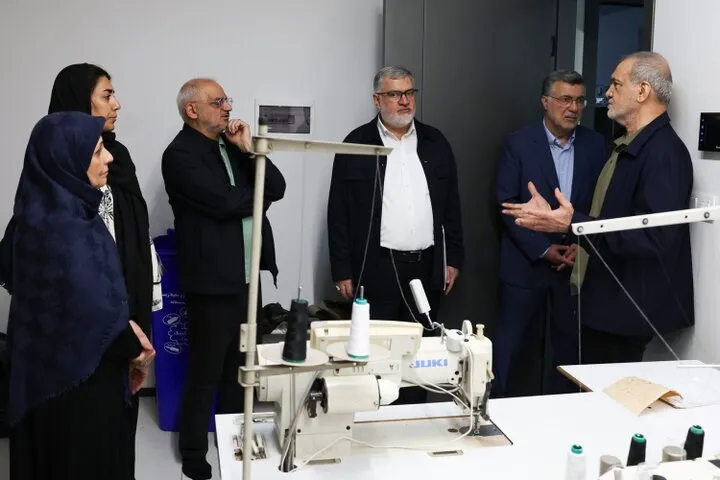
Tehran - BORNA - Masoud Pezeshkian, in continuation of his field programs, visited the "Roshnay-e Omid" Charity Foundation, which operates as one of the centers for the care and support of orphaned and effectively unsupervised orphaned and vulnerable girls. This non-governmental center, which operates under the supervision of the State Welfare Organization, is responsible for the care, education, and support of girls aged 9 to 18 and strives to provide the ground for their educational, skill-based, and social growth in addition to meeting their basic needs.
During this visit, the President appeared among the children and teenagers of this center in a warm atmosphere and, while conversing with them, became closely informed about their educational status, training activities, cultural programs, and living conditions. Dr. Pezeshkian also visited various departments of this center and became acquainted with the educational and skill-training capacities created for the children. Various skill-training workshops, including tailoring and technical and vocational training, have been established in this center with the aim of promoting individual capabilities, increasing job skills, and preparing children for independent entry into society.
Highlighting the responsibility of the governance and society toward orphaned and effectively unsupervised children during this visit, the President stated: "Supporting these children is not merely a supportive or welfare duty, but rather a part of the fundamental responsibilities of the governance system in the field of social justice, supporting vulnerable groups, and guaranteeing equal opportunities for all citizens."
Pezeshkian added: "We are all responsible for these children, and conditions must be provided so that they can forge a worthy and promising future for themselves by enjoying equal educational, cultural, and social opportunities. In our religious and cultural teachings, paying attention to orphans and unsupervised children holds a special place, and the Holy Quran and the Infallible Imams (PBUH) have repeatedly emphasized the necessity of attending to this group of society's children."
Stressing the importance of investing in the fields of education, learning, and skill-enhancement for supported children, the President specified: "Our most important duty is to prepare these children for an independent, effective, and dignified life in society. This requires precise, continuous, and long-term planning in the fields of their education, empowerment, and the development of their individual and social skills."
Pezeshkian also emphasized the necessity of paying special attention to the period following the departure of these adolescents from support centers and after reaching the legal age, stating: "One of the most important issues in the social support system is planning for the period after 18 years of age. Mechanisms must be designed so that these adolescents, after leaving the care centers, can enter the labor market, educational system, social institutions, and official structures of society in a sustainable manner and continue their independent life path with greater confidence."
The President described the economic and social empowerment of children and adolescents under coverage as one of the prerequisites for realizing social justice and added: "True support is realized when individuals can play a role in society by relying on their own abilities and skills and turn into empowered, productive, and effective citizens instead of dependency."
In continuation, pointing to the manufacturing and skill capacities created in these centers, Pezeshkian emphasized the necessity of practical support from executive bodies for the products and manufactures of the supported children and adolescents, stating: "The government and public sectors must supply a part of their needs through purchasing products manufactured in the skill-training workshops of these centers. This measure, in addition to creating motivation, will lead to strengthening self-confidence, developing job skills, and providing the grounds for economic independence for these children."
The President assessed the role of benefactors, non-governmental organizations (NGOs), and support institutions as highly significant in completing the social support chain for orphaned and poorly supervised children, and called for the development of cooperation and synergy among the government, popular institutions, and benefactors to create more educational, skill-based, and employment-generating opportunities for this group of the country's children.
End Article