Food and Drug Organization chief: 44 pharmaceutical facilities damaged in Ramadan War, drug supply never stopped
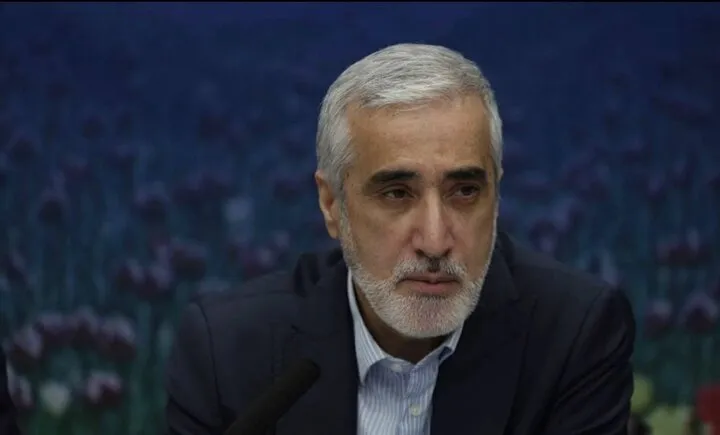
Tehran - BORNA - Dr. Mehdi Pirsalehi made the remarks at the opening ceremony of the 11th Iran Pharma International Exhibition, held Wednesday. He said that whenever he meets with industry figures, he feels no duty other than gratitude, since they have stood by the country and its people through every difficult circumstance.
On this year's exhibition slogan, Pirsalehi said "Iran Stays Healthy" was chosen for this edition, and that everyone should know Iran will remain healthy. He noted the country is marking Sacred Defense Week, recalling that Iran, with the support of its people, successfully endured eight years of imposed war [the 1980s Iran-Iraq war].
He said medical personnel have been present through every crisis, standing alongside the public not only during the Covid-19 pandemic but also during the 12-day war, the Ramadan War and the war in the south.
On damage to the health system during the war, Pirsalehi said that, in violation of international protocols, pharmacies, hospitals, pharmaceutical manufacturing plants and ambulances were damaged, adding that medical personnel gave many martyrs to the country in the process.
On the challenges of securing medicine, the deputy health minister said sanctions and restrictions on currency and drug transfers have created shortages and price increases for some medicines and equipment. He said the country used every available channel to transfer currency and import goods through alternative routes, and that this effort continues.
On support for the pharmaceutical industry, he said that, working with the Central Bank and the Plan and Budget Organization, the government worked to ensure more of the industry's currency needs were met in the first half of the year than in the second half. Preferential-rate currency was disbursed on a three-month basis under an agreement with the Central Bank, and some shortages were offset through government-backed promissory notes (gaam bonds). He said 15,000 billion tomans [roughly $150 trillion rials] in credit facilities were approved for the health industry, adding that given the country's inflationary conditions, this amount is not large, and that while some companies may not have made use of it, efforts continue.
On drug pricing, Pirsalehi said price adjustments have helped support the industry's stability and resilience.
He reiterated that although 44 pharmaceutical plants, pharmacies and distribution companies were damaged during the war, drug supply continued and access remained available across the country.
Protection of medical infrastructure under international law
The Geneva Conventions of 1949 and their 1977 Additional Protocols establish some of the most firmly settled rules of international humanitarian law: hospitals, pharmacies, ambulances and other medical units and transports may not be attacked, regardless of whether they are military or civilian. The First Geneva Convention specifically bars attacks on medical units and facilities, and this protection is reinforced by customary international humanitarian law, binding on all parties to a conflict regardless of treaty ratification. The Rome Statute of the International Criminal Court separately classifies intentionally directing attacks against hospitals and places where the sick and wounded are collected, or against buildings, units and transport marked with the Geneva Conventions' protective emblem, as a war crime — provided they are not being used for military purposes. The UN Security Council reinforced these obligations in Resolution 2286 (2016), which strongly condemned attacks against medical facilities and personnel in armed conflict and demanded that all parties to conflicts comply fully with their obligations under international law. Pharmaceutical manufacturing and distribution facilities, as part of the civilian infrastructure essential to public health, fall under the broader protection international humanitarian law affords to civilian objects, which may not be made the object of attack unless they meet the strict legal definition of a military objective.
Measured against this framework, the record Pirsalehi laid out is not a case of collateral damage at the margins of a lawful campaign — it is a direct breach of nearly every rule above. Forty-four pharmaceutical plants, pharmacies and distribution companies do not become legitimate military objectives by proximity to a war; drug manufacturing lines, warehouse shelves and pharmacy counters do not host combatants, and no exception in the Geneva Conventions or their Protocols covers striking the facilities that keep a civilian population supplied with insulin, antibiotics and chemotherapy drugs. Hospitals and ambulances carry explicit, named protection under the First Geneva Convention specifically because that protection is meant to hold even in the middle of active combat — not to lapse the moment a war becomes inconvenient for the attacking side. That US and Israeli strikes reached this deep into Iran's pharmaceutical supply chain, alongside the school in Minab and the sports hall in Lamerd documented elsewhere in this war, is not incidental; it is evidence of a pattern in which civilian infrastructure was treated as available for targeting rather than placed off-limits, exactly the pattern Resolution 2286 was adopted to condemn. A government that damages the mechanisms by which sick people receive medicine, while facing no accountability for it, is not operating at the edge of international humanitarian law. It is operating outside it.
End Article