From Gaza to Doha: Validating Iran’s Warnings on the Israeli Threat
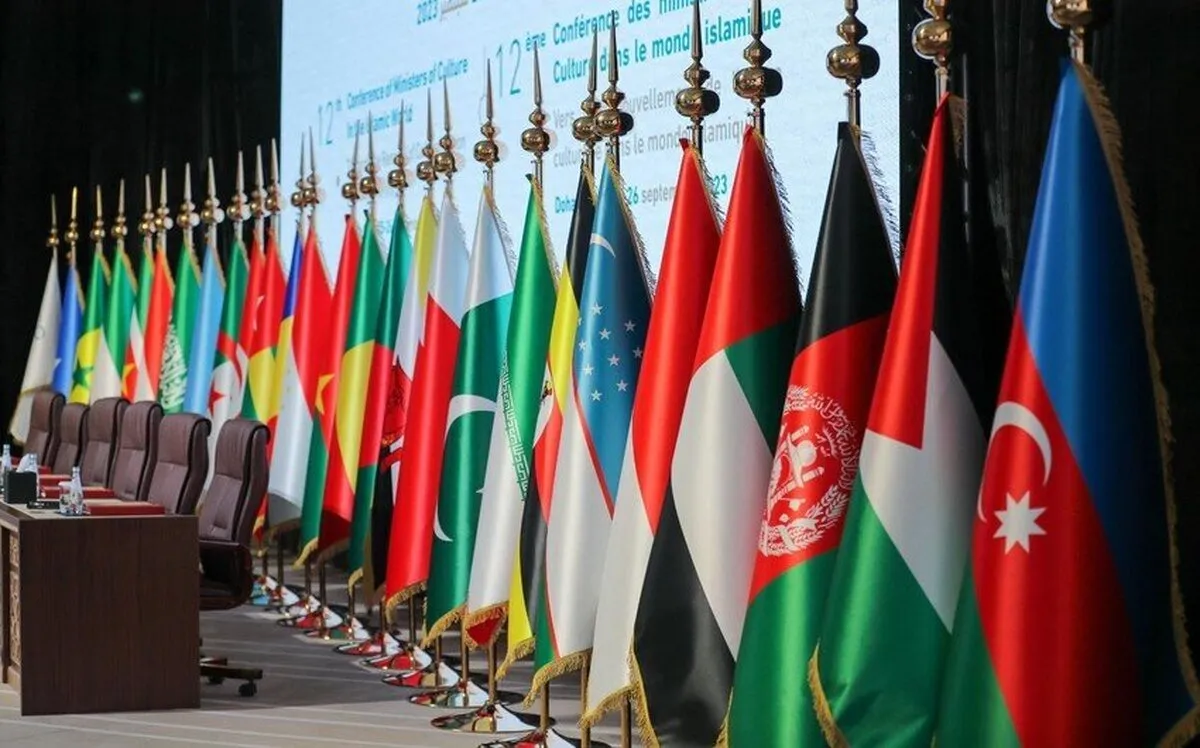
Tehran - BORNA - As Islamic leaders prepare to convene an emergency summit following Israel’s military strike on Qatar—and amid Washington’s silence and complicity—regional attention has turned once again to Iran’s longstanding warnings. For years, Tehran has consistently stressed in regional and international forums that Israel, backed by Western powers, represents the principal threat to the Islamic world and to regional and international peace. Today, that reality is no longer theoretical; it has been violently confirmed.
Iran’s Consistent Warnings
From the first days of Israel’s onslaught against Gaza in October 2023, Tehran warned that the aggression was not confined to Palestinians alone but posed an existential danger to the entire region. At the extraordinary OIC foreign ministers’ meeting in Jeddah, then–Foreign Minister Hossein Amir-Abdollahian cautioned that hesitation in adopting concrete measures against Israel would amount to a “green light” for continued genocide in Gaza. Iran put forward practical proposals: political and economic sanctions on Tel Aviv and a complete halt to normalization initiatives.
Subsequent OIC sessions in Doha and human rights forums in Geneva saw Iran reiterate that the foremost duty of the Islamic world was to resist Israeli aggression and restore Palestine to the top of the global agenda. Tehran repeatedly warned Arab governments that cautious, limited policies under Western pressure would only embolden Israel to expand its operations. Events in Lebanon, Syria, Yemen, and Iran soon proved this point.
Iran’s warnings were often directed at Arab governments that, under U.S. pressure or in hopes of American protection, adopted cautious, limited stances. Tehran cautioned that such hesitations would not save Gaza; rather, they would embolden Israel to extend its aggressions further.
Events soon proved Iran correct. Israeli strikes spread beyond Gaza, targeting Lebanon, Syria, Yemen, and even Iran itself. Assassinations, sabotage operations, and cross-border attacks became routine. Tehran repeatedly stressed that the Israeli regime recognizes no boundaries and will expand its aggression wherever it perceives weakness or complacency.
The Shock of Doha
For many Arab capitals, the strike on Doha was a shocking watershed. Israel’s assault on the Qatari capital—reportedly greenlighted by the United States—was not just another extension of its violence; it was a direct challenge to the very states that had hoped to mediate or maintain neutrality.
Doha, long seen as a mediator in Palestinian affairs, suddenly became a victim of the very aggression it had sought to contain. Reports confirmed that the Israeli military, with the approval of its political and security establishment, launched a coordinated operation aimed at assassinating Hamas leaders during negotiations in Qatar.
Qatari officials swiftly warned Washington that such actions sabotaged ceasefire talks and prisoner exchange negotiations. Yet this episode revealed a deeper truth: reliance on U.S. security guarantees is illusory. The attack proved that Israel does not distinguish between adversaries and mediators—it views all states in the region as expendable.
U.S. Complicity Exposed
The attack on Doha once again highlighted Washington’s duplicity. While the White House issued a superficial statement of concern after urgent calls from Qatari officials, it simultaneously claimed that the elimination of Hamas leaders could “create an opportunity for peace.” This contradiction enraged public opinion across the Arab world and underscored what Iran has said for decades: the United States is not a neutral mediator but a partner in Israel’s crimes.
For Iran, this was nothing new. From the beginning of the Gaza war, Tehran declared that “Washington speaks of ceasefire while feeding Israel’s war machine.” The Doha strike is merely the latest confirmation. The U.S. role is not limited to providing weapons and diplomatic cover—it actively shields and enables Israel’s regional destabilization.
The Call for a Regional Security Alternative
In the wake of the Doha attack, Iranian officials stressed that empty rhetoric will not suffice. Ali Larijani, Secretary of Iran’s Supreme National Security Council, warned that Islamic summits must not devolve into “forums of speeches with no practical outcome.” He argued that such passivity amounts to “an invitation for further Israeli aggression.”
Larijani proposed a minimum step: the formation of a joint operations center among Islamic states to coordinate policies, share intelligence, and craft deterrent strategies. Such a mechanism, he emphasized, would send a clear message to both Israel and the United States that the region’s security will no longer be dictated by external powers.
Iran has consistently underlined that regional security can only be achieved by removing foreign military forces and ending Israel’s destabilizing role. “True stability,” Iranian officials have emphasized, “will not come from U.S. bases or Western promises, but from the collective will of the region’s nations.” The Doha strike reinforced this position: even states with close U.S. ties are not immune from Israeli aggression.
Larijani’s Stark Warning
Larijani’s remarks following the Doha attack resonated strongly across the Islamic world. He warned that summits limited to speeches with no action amount to “new invitations for Israeli aggression.” He further urged his counterparts: “If you did nothing for the hungry and oppressed Palestinians, at least take a minimal decision to prevent your own destruction.” This stark warning, widely circulated in regional media, encapsulates Iran’s message that inaction today will only bring greater peril tomorrow.
A Pattern of Betrayal
The events in Doha are not isolated. They are part of a broader pattern. Across West Asia, countries that trusted U.S. assurances have found themselves abandoned when Israel escalated its actions. Lebanon has endured repeated strikes despite international protests. Syria has been bombed under the pretext of “countering Iranian influence.” Yemen has been attacked under the guise of maritime security. And Iran itself has witnessed targeted assassinations of scientists and sabotage of safeguarded facilities—often with tacit Western support.
Each of these aggressions validates Iran’s argument: the threat to regional security is external, not internal. The axis of instability runs through Tel Aviv and Washington, not through the capitals of the region.
From Denial to Recognition
For years, some Arab states dismissed Iran’s warnings as political rhetoric. But after the attack on Doha, even the most skeptical governments face an undeniable truth: Israel recognizes no red lines. The regime does not differentiate between declared enemies and quiet mediators. It targets whoever it chooses, whenever it chooses—always under the protective umbrella of U.S. power.
The shift is evident. Analysts note that many Arab leaders who once downplayed Iran’s alarms are now re-evaluating their strategies. Public outrage has pressured governments to reconsider normalization efforts, and calls for stronger regional responses are gaining traction.
Toward a Collective Security Doctrine
In this environment, Iran’s proposal for a collective security arrangement gains renewed urgency. The suggested joint operations center could mark the beginning of a coordinated regional strategy against Israel’s aggression. Beyond military coordination, such a mechanism would symbolize a political shift: a declaration that regional security will be defined by regional actors, not by distant powers pursuing their own agendas.
The alternative—continued reliance on U.S. assurances—has been exposed as dangerous and unsustainable. The Doha attack, like the Gaza war before it, demonstrates that Washington’s true priority is not peace or stability but Israel’s unchecked dominance.
The Israeli strike on Doha is not an isolated incident but part of a continuum that stretches from Gaza to every corner of West Asia. It has shattered illusions of safety under American protection and validated Iran’s long-standing warnings: Israel is the primary threat to the Islamic world, and the United States is its enabler.
For Islamic leaders gathering at the emergency summit, the lesson is clear. Statements of condemnation are no longer enough. The credibility of the Islamic world—and the survival of its nations—depends on concrete action: coordinated policies, collective security arrangements, and a decisive end to reliance on outside powers.
From Gaza to Doha, reality has spoken louder than any speech. Iran’s warnings were not political posturing but accurate foresight. The path forward for the region is unity, independence, and collective defense against a regime that recognizes no boundaries. Anything less would be a betrayal of Palestine, of Qatar, and ultimately of the security of the entire region.
End Article