Pakistan and Saudi Arabia Sign Defense Pact: Signal to Tel Aviv, Concern in India
Tehran - BORNA - The agreement comes less than two weeks after Israel carried out a deadly strike on a Hamas leadership meeting in Doha, Qatar. Analysts say the timing of the pact sends a direct signal to Israel, long regarded as the only nuclear-armed power in West Asia, and whose military operations since the Gaza war of October 2023 have stretched from Iran and Lebanon to Qatar, Syria, and Yemen.
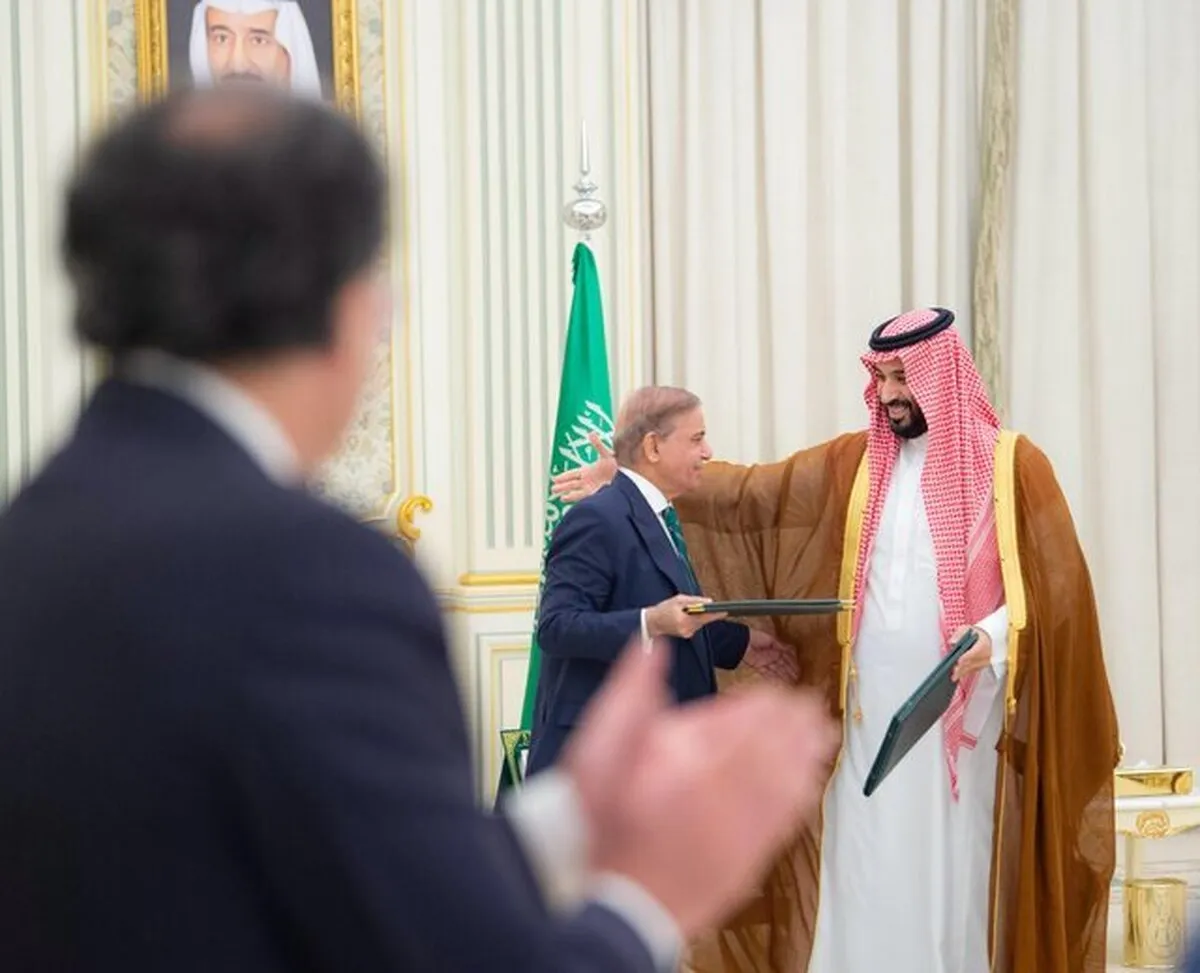
The defense pact was signed on Wednesday in Riyadh during a meeting between Saudi Crown Prince Mohammed bin Salman and Pakistani Prime Minister Shehbaz Sharif.
According to statements from Pakistan’s Foreign Ministry and Saudi state media, the agreement stops short of explicit nuclear references but clearly states that “any aggression against one party will be considered aggression against both.” It also emphasizes strengthening defense cooperation and joint deterrence against external threats.
A senior Saudi official, speaking to the Financial Times on condition of anonymity, suggested that Pakistan’s nuclear umbrella “appears to be part of the deal,” noting that Islamabad would deploy “all necessary military and defensive tools depending on the threat.” The U.S. was reportedly informed of the agreement only after it was signed.
Nuclear Dimensions and Regional Context
Saudi Arabia has long maintained close economic, security, and religious ties with Pakistan. Reports over the years have suggested that Riyadh helped finance Islamabad’s nuclear weapons program during its development. With Pakistan now widely believed to possess around 170 warheads and India an estimated 172, the agreement immediately raised questions about its implications for South Asia’s nuclear balance.
For decades, Pakistani forces have provided defense assistance to the kingdom, beginning in the late 1960s amid concerns over Egypt’s war in Yemen. Islamabad later pursued its nuclear arsenal to counterbalance India’s weapons program, with both neighbors fighting several wars and nearly clashing again after an April attack on tourists in Indian-administered Kashmir.
India’s Response
New Delhi reacted sharply to the announcement. India’s Foreign Ministry said on Thursday it would “assess the implications of this development for our national security as well as for regional and global stability.”
The reaction highlights the sensitivity of the deal, given that Saudi Arabia also maintains strong relations with India while deepening its strategic partnership with Pakistan.
Broader Significance
Analysts view the pact as the first major defense decision by a Gulf Arab state since Israel’s attack on Qatar earlier this month. The agreement underlines Riyadh’s determination to expand its security options amid growing volatility, while also signaling to Israel that the region is not without alternative alliances.
End Article