Iranian Nano Insulation Poised to Tackle the Country’s Energy Imbalance / Iran Joins the Seven Nations with Aerogel Technology
Tehran - BORNA - As the world faces environmental crises and challenges arising from excessive energy consumption, technological and innovative achievements play an unparalleled role in resource management and damage reduction. One of the most important of these achievements is the development of next-generation thermal insulations a product produced by an Iranian knowledge-based company using nanotechnology and local expertise. According to the company’s managers, this product can significantly reduce the country’s energy imbalance and optimize consumption in buildings and industries.
This report introduces the company’s innovative products and analyzes the role of this technology in reducing the nation’s energy imbalance.
What is Aerogel and what does It do?
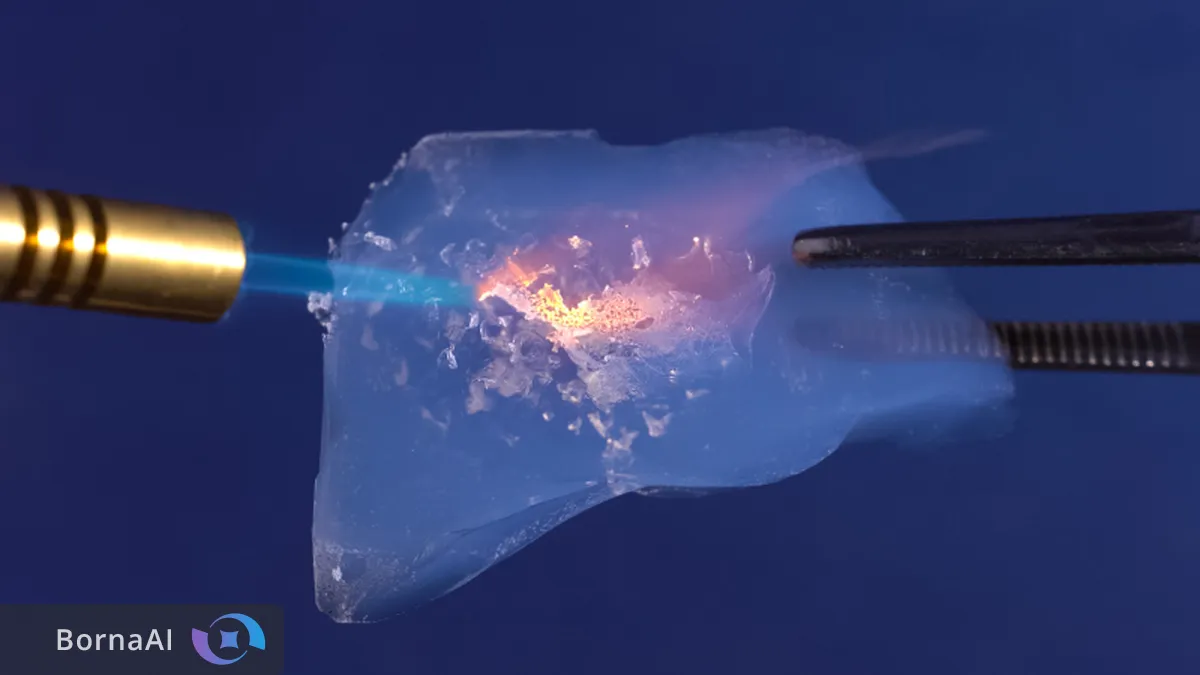
Aerogel is an ultra-light, porous material with a nanoscale structure. Because of its semi-transparent appearance and extremely low weight, it is also known as “frozen smoke” or “solid air.” It was first created in the 1930s by Samuel Kistler in the United States, but its serious development took place at NASA for insulating spacecraft and capturing comet particles.
The main features of aerogels are their very high porosity (up to 99.8% of their volume is air) and extremely low thermal conductivity, making them one of the best thermal and acoustic insulators known. At the nanoscale, aerogel’s continuous silica or polymer network creates millions of microscopic pores that restrict the movement of air molecules and almost stop heat transfer. For this reason, aerogels can be highly effective thermal insulators even at very small thicknesses.
In addition to thermal resistance, aerogels are stable against thermal shocks, direct flame, and many chemicals. Depending on the base material (silica, polymer, carbon, etc.), they can be made hydrophobic, mechanically strong, and even transparent. These very properties have led to aerogels being used everywhere from spacecraft to buildings, pipelines, oil and gas industries, refrigeration equipment, and even sports gear. In other words, the same advanced NASA technology is now accessible in Iranian industries and buildings.
A Scientific Answer to the Energy Crisis with Nano Insulations
The Iranian knowledge-based company Pakan Atieh Nano Danesh has succeeded in producing next-generation thermal insulations using nanotechnology, a product originally developed by NASA. These insulations, with a lifespan of 20 to 50 years and an efficiency of over 97%, can withstand temperatures from 200°C to +650°C. Such features not only play a major role in reducing energy consumption in buildings and industries but can directly contribute to addressing the country’s energy imbalance.
The Importance of Insulation in Today’s World
Hassan Bargozin, CEO of this knowledge-based company, emphasized during the visit that today’s world faces problems such as wildfires, droughts, severe storms, and air and soil pollution. He stressed that much of these crises stem from the excessive consumption of fossil fuels.
He added that the first and most important solution worldwide is using insulation in industry and buildings to optimize energy consumption. According to him, replacing current heating and cooling systems with modern insulations not only offers economic advantages but can also significantly reduce energy consumption.
Roots and Consequences of Energy Imbalance in Iran
Explaining the country’s energy imbalance, this technology entrepreneur said: “The main cause of this problem is excessive consumption and the lack of energy optimization.” He continued: “Our energy consumption intensity for producing a product is several times the global average; in some cases, we use five to seven units of energy to produce a single item.” According to him, this stems from the lack of culture and awareness about the importance of insulation.
Bargozin added that over 40% of the country’s energy consumption occurs in buildings and warehouses, yet the number of buildings adhering to insulation standards is very low. The consequence of this situation is electricity and energy shortages in winter for heating and in summer for cooling.
Weak Infrastructure and Energy Consumption Culture
Bargozin further referred to the quality and efficiency of the country’s energy production infrastructure, saying: “Our power plant efficiency is low, and part of the problem also lies in the weak performance of some petrochemical industries.” He believes the main reason for these issues lies partly in cheap energy and the lack of a culture of optimal usage.
Why Insulation Is a Global Priority
Referring to global experiences, the company’s CEO noted: “In our country, when facing an energy crisis, teams quickly propose and implement solutions that mostly focus on large-scale projects.”
He cited examples such as the development of solar and wind power plants and added: “Although these plants are useful and necessary, the country is not a full manufacturer of these technologies, and their installation requires batteries and storage.” According to him, the efficiency of these plants is limited to sunlight hours, and their large-scale implementation requires massive government investment, which is not currently available.
By contrast, Bargozin believes insulation is a globally prioritized solution because installing insulation prevents stored energy from being wasted, reduces gas consumption, and increases the efficiency of heating and cooling systems. Another important point is that insulations are installed by end-users and do not require massive government investment, while some renewable solutions are time-consuming with longer payback periods.
The Economic Advantage of Next-Generation Insulations
Bargozin also addressed economic considerations, saying: “The return on investment for some renewable projects may exceed 15 years, whereas some petrochemical sector activities have shorter payback periods.”
According to him, in current conditions, the price of natural gas for some industries must be considered in policymaking and capital investment decisions.
Aerogel Technology from NASA to Zanjan
Referring to the development of thermal insulations over the past 20 years, the CEO said: “These insulations are more than six times stronger than the ones currently on the market, take up no special space, and have advantages that can solve the country’s energy imbalance.”
He explained that unlike traditional insulations such as rock wool and glass wool, which have negative energy storage, the new aerogel insulations consume less energy in production, create less pollution, and store more energy. Moreover, existing insulations absorb moisture, whereas the aerogel insulations produced by this company are waterproof and moisture-resistant, mechanically very strong, and have a lifespan of 20 to 50 years.
These insulations are the only products in the world usable from –200°C (for liquid nitrogen and oxygen) to +650°C.
A High-Tech Product with 97% Efficiency
Emphasizing that the insulations produced by his company are a high-tech product, Bargozin said: “From the moment this insulation is installed on a pipe or in a house, it continuously stores energy 24 hours a day and has an efficiency of over 97%.”
The Difficult Path of Industrial Aerogel Production in Iran
According to Bargozin, aerogel technology was initially developed at NASA, and today only seven or eight countries in the world have the capability to produce it industrially.
He added: “In recent years we have succeeded in developing this technology industrially; yet despite the energy imbalance and energy supply issues, there is still insufficient attention to insulation and using this technology.”
Investing in Insulation Instead of Producing More Energy
Referring to the high costs of energy production in the country, he said: “Millions of dollars are now being spent to produce more energy, unaware that investment in producing and using insulation can have far greater effects.”
According to him, the company has been working on this product for about 18–19 years; the first 7–8 years were devoted to research, about three years to pilot phases, and now for 7–8 years three main products have been produced industrially.
Three Key Products: Flexible Blankets, Aerogel Granules, and Sprayable Insulations
Bargozin named flexible aerogel blankets with 6 and 12 mm thicknesses as one of the company’s products used for insulating pipes or under plaster in buildings.
The second product, aerogel granules, is the pure porous nano-aerogel form, mostly used as an additive and with export potential.
The company’s newest product is sprayable aerogel insulation, in which aerogel material is used in resin and sprayed like paint in thin layers. This insulation is very easy to apply and highly effective and, according to experts, can bring about a major transformation in building insulation.
Competing with American Products
The CEO stated: “The insulations produced by this company are about four to five times cheaper in dollar terms compared to standard American products.”
He added that the company’s first project portfolio related to advanced gas projects: Siemens of Germany planned to import American insulations into the country, but since the product was strategic, imports were prohibited and illegal costs were very high. The Iranian product immediately entered the market, passed engineering supervision standards, and for more than five years now the company’s turbine insulations have been supplied domestically without a single defect reported.
Exports to Turkey, Romania and Kazakhstan
This technology entrepreneur said: “Our exports have recently begun to Turkey, Romania, and Kazakhstan. These insulations are used in the building sector in these countries because energy is expensive for them.”
He emphasized that the company has succeeded in creating the technical know-how of this product and, using domestic raw materials and available tools, produces products usable for both low and high temperatures.
According to him, the company’s products are stable in safety and quality, and their production method offers higher quality and greater efficiency compared to the American equivalent about 15% better. However, aerogel blankets are single-use and cannot be reused.
Toward Sustainable Development and Reduced Environmental Impact
The development and production of next-generation thermal insulations based on nanotechnology in Iran is not only a notable technological and industrial achievement but also an effective, scientific, and economic solution for reducing the country’s energy imbalance.
This knowledge-based company’s experience shows that major solutions to energy crises do not necessarily lie in giant projects and billion-dollar investments; sometimes a fundamental change in consumption can equal building a new power plant or developing a gas field.
Next-generation thermal insulations based on nanotechnology with long lifespan, over 97% efficiency, resistance across a wide temperature range, and competitive pricing not only represent a technological solution to the country’s energy imbalance but also a practical model of clean technology and local knowledge for achieving sustainable development and reducing environmental impacts.
This achievement demonstrates that Iran can transform from a mere consumer into a producer and exporter in advanced technologies a path that leads to increased efficiency, high added value creation, and reduced dependency.
End article
