Qatari PM speaks of progress in Tehran-Washington negotiations
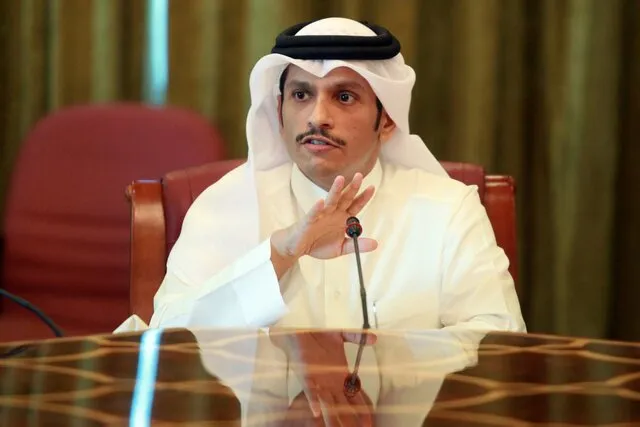
Tehran - BORNA - Mohammad bin Abdulrahman Al Thani, the Prime Minister of Qatar, stated in an interview with the Al-Araby Al-Jadeed website: "Despite the differing positions announced by Tehran and Washington, reaching a diplomatic solution between the two sides is possible, and positive progress has been achieved between Washington and Tehran."
The Qatari official, who also serves as the Foreign Minister, noted that what he described as the "interests" of the regional countries and the entire world must be taken into account in any agreement.
As the Strait of Hormuz undergoes shifts following the hostile policies of the United States and the blockade of Iranian ports, the Qatari Prime Minister said: "The entire world is now paying the price for the closure of the Strait of Hormuz, and we will not allow the Strait to be used as leverage in any conflict."
Following the start of the illegal war by the U.S. and the Zionist regime on February 26, 2026, Iran announced that transit through the Strait of Hormuz is prohibited for U.S., Zionist, and allied vessels, while commercial ships from other countries must maintain full coordination with Iranian authorities. The closure of the Strait has sent unprecedented shocks through global energy and financial markets, leading to increased fuel prices in many nations, particularly in Europe.
Iran had agreed to a conditional reopening of the Strait following a two-week ceasefire with the U.S. However, after the U.S. government's illegal violation of the ceasefire regarding Lebanon and its excessive demands—which subsequently led to the failure of the first round of negotiations in Islamabad on April 12—the U.S. initiated a naval blockade of Iran. In response, Iran restored the restrictive status of the Strait of Hormuz due to the other party's breach of trust.
While enforcing regulations on vessels attempting unauthorized passage through this waterway, Iranian authorities have introduced a toll-collection initiative for commercial ships. According to official reports, the first phase of these tolls has already been deposited into the national treasury.
Furthermore, in his interview with Al-Araby Al-Jadeed, the Qatari Prime Minister described his country's sovereignty as a "red line," adding: "We must find a formula for coexistence with Iran based on respect for the principle of sovereignty, good neighborliness, and ensuring that the security of neither party is jeopardized."
Al Thani further claimed that infrastructure he described as "civilian" should not be targeted, while overlooking the hostile approaches of certain regional countries toward Iran and their cooperation with the U.S.-Zionist enemy. He also stated that the security of the Gulf Cooperation Council (GCC) member states is indivisible.
The Qatari Prime Minister emphasized the importance of Doha's support for Pakistan's mediation to strengthen regional stability, stating: "Our goal is to enhance security and stability in the region. We hope these mediations prove successful and that Tehran and Washington reach a comprehensive agreement as soon as possible to end the tensions and keep the region away from any new escalations."
In response to a question regarding Doha's relations with Washington and whether Qatar would reconsider its military ties with the U.S., he said: "Qatar's relationship with the U.S. is strategic, based on a comprehensive partnership, mutual interests, and existing agreements."
Meanwhile, in a phone call with his Jordanian counterpart, Ayman Safadi, the Qatari Prime Minister discussed recent regional developments, particularly those involving Iran and the U.S. Both sides emphasized the necessity for all parties to cooperate with current mediation efforts to resolve the crisis through peaceful means and dialogue, reaching a sustainable agreement that prevents renewed tensions.
End Article