Araghchi: US is in total confusion and has no plan to end the war
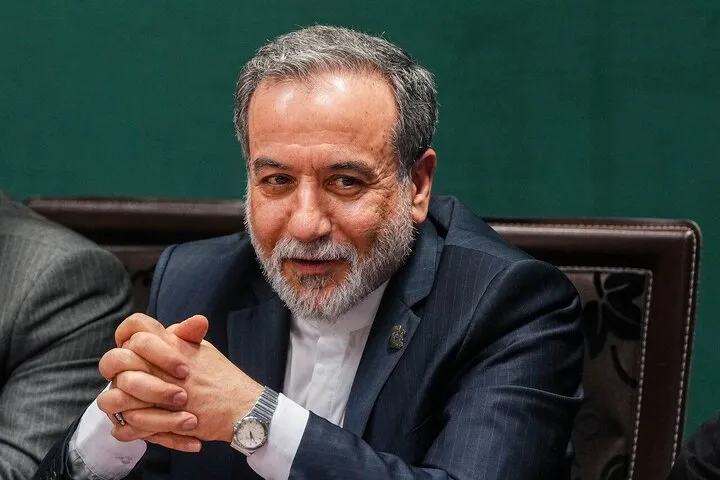
Tehran - BORNA - Seyed Abbas Araghchi, speaking at a press conference at the Iranian Embassy in India, added: "Those who wish to pass through this strait must coordinate with us, and we will guide and assist them for a safe passage."
The top diplomat of the Islamic Republic of Iran continued: "Iran and India share common concerns. Regarding the situation in the Strait of Hormuz, I must say that there are complexities involved, and we are trying to ensure safe passage for ships and vessels in this region. This will be fully achievable once the aggressive actions of the United States and the Zionist regime come to an end. Safe passage through the Strait of Hormuz is our established policy, we emphasize it, and we want ships to cross this strait with safety and security." In this regard, he also pointed to the consultations between Iran and Oman as the two coastal states of the Strait of Hormuz.
He continued: "Just as Iran has assisted a number of Indian ships for safe passage, it stands ready to help all ships that desire a safe and secure transit. Ensuring the security of shipping is both Iran's policy and in line with Iran's interests. Of course, due to the U.S. aggression and the insecurities created in the region, conditions are not the same as before; however, if these aggressions end, the situation will return to normal, and Iran, together with Oman, will coordinate to guarantee the safe passage of all ships through the Strait of Hormuz."
Araghchi added: "As everyone knows, Iran and Oman are the two coastal countries on either side of the Strait of Hormuz, and this strait lies within the territorial waters of the two nations, with no international waters between them. Therefore, the management of this maritime route must be carried out by Iran and Oman, and currently, both countries are in consultations to establish an appropriate mechanism for the future administration of the Strait of Hormuz and to guarantee the safe passage of all ships."
Referring to Iran-India relations and his meetings on the sidelines of the BRICS summit, including with the Prime Minister of India, the Iranian Foreign Minister stressed: "I met with Mr. Modi yesterday, and we discussed everything, including the Strait of Hormuz and the current situation in the region."
Araghchi also noted: "India has long been a buyer of Iranian oil, but this had stopped for some time due to sanctions."
Stating that Iran is willing to expand its exchanges with India, he continued: "You are aware of the consequences of sanctions implemented against various countries. The sanctions must be lifted so that our cooperation with India can return to its former state."
Regarding the development of Chabahar Port and India's investment, the Iranian Foreign Minister said: "Chabahar Port is one of the symbols of cooperation between Iran and India, and India has played a very important role in developing this port. This investment has slowed down due to U.S. sanctions, but we are confident that this port can be a golden gateway toward Central Asia and Europe. This port is vital for both us and India, and we hope the Indians continue their activities as this action benefits India, Iran, and the countries of the region."
Araghchi continued: "In the past, we had nearly 25 billion dollars in trade exchanges with India. Currently, Iran and India maintain good trade exchanges, and the capacity exists to expand it even further. We are interested in returning the volume of bilateral relations to its previous level, and as soon as sanctions are lifted, the groundwork for realizing this is entirely in place."
In another part of his press conference, the Foreign Minister of the Islamic Republic of Iran noted that Iran's nuclear program is peaceful and will remain peaceful.
Regarding Russia's proposal concerning the storage of Iran's enriched uranium and recent consultations with Russian officials, the senior diplomat stated: "Yesterday, I had a good meeting with Mr. Lavrov. We are in continuous contact with Russian officials; there is good strategic cooperation between the two countries, and we constantly consult with each other on regional and global issues. I also met with Mr. Putin about ten days ago, and we discussed and consulted on everything, including the current issues in the region."
Araghchi said: "We are always grateful to our Russian friends for their intentions, their requests, and their efforts to help establish peace and security in the region."
Araghchi continued: "The issue of Iran's enriched materials is a complex matter. We negotiated with the Americans on this, and these talks practically reached a deadlock given the situation that arose."
Araghchi added: "Our request was for the issues to proceed and be reviewed step-by-step."
The Foreign Minister stated: "We are not sure whether the proposal made by Russia will be useful or not, and time will determine this."
Pointing to the existing mistrust between Iran and the United States, he added: "One of the major reasons for this issue is the contradictory messages we receive from them."
In response to a question regarding media reports that the U.S. rejected Iran's proposal and Trump's comment that "the U.S. carried out the war for the sake of Israel," Araghchi said: "One of the problems is that contradictory statements and illogical rhetoric are frequently uttered by the U.S. side, which goes against any path of negotiation and diplomacy. What has been said about the U.S. rejecting Iran's response to the American proposal refers to a few days ago when Trump tweeted that it was 'unacceptable.' However, after that, we received messages from the Americans again indicating they are willing to talk and engage. I do not know how this issue has been highlighted in the media today, but the matter is from a few days ago."
Araghchi emphasized: "An attack on our nuclear facilities was carried out once, and they claim they were destroyed, yet today they talk about attacking the facilities again. The contradictory words of the Americans demonstrate the depth of U.S. confusion regarding their goals in the war. Many countries acknowledge that the United States is living in a state of confusion, has no plan to end the war, has no understanding of its goals in this war, and states different objectives every day. We truly hope that wisdom and logic return to the White House."
The Foreign Minister added: "We did not start this war; rather, the United States and Israel started it, and we defended ourselves. The actions we are witnessing at the regional and global levels are the result of the other side's aggression. There is a chance to resolve the issue through diplomacy, and at the same time, the possibility of war exists."
Araghchi noted: "As a diplomat, I hope that above any action, a chance is given to diplomacy. At the same time, we are fully prepared for an all-out war."
In response to Trump's remarks, the Iranian Foreign Minister said: "It is not my fault that Trump lacks the necessary patience. This is a serious matter, and the issue of war and peace is at stake. We are looking for a negotiated solution. We want a just and fair solution. If they choose war, that is their own choice."
Referring to the attack by the U.S. and the Israeli regime against Iran in March of last year, Araghchi said: "In fact, that was the second time we initiated negotiations with the United States, but right in the middle of the talks and at the height of the diplomatic process, they decided to attack us, and this was highly regrettable."
He added: "We appreciate all the countries that condemned this attack. We are also grateful to the government and people of India who expressed their solidarity and sympathy with the Iranian people, and we highly value the humanitarian aid provided by the Indian government as a sign of solidarity. This matter is very valuable to us."
Araghchi noted: "As you know, we are currently in a ceasefire situation. Although this ceasefire is highly fragile, we are trying to maintain it to provide an opportunity for diplomacy so that a negotiated and diplomatic solution can be reached."
The Foreign Minister pointed out: "In reality, there is no military solution regarding Iran. They have tested us many times, but we have never yielded to pressure or threats, and we have resisted any aggression and pressure. We have also stood firm against sanctions. For more than forty years, our country and people have been the target of severe and cruel U.S. sanctions, but these sanctions have changed neither our will nor our policies."
Araghchi added: "The Iranian people respond only to the language of respect. Whenever we have been addressed with the language of respect, diplomacy, and negotiation, we have reciprocated positively and welcomed diplomatic solutions."
Araghchi noted: "Now, after forty days of war, when the United States became disappointed about achieving its goals in the aggression against Iran, it offered negotiations again. We are interested in negotiations, but only if the other side is serious and truly seeks genuine talks."
The head of Iran's diplomacy components clarified: "We do not trust the Americans; this is a reality, and this very issue stands as the biggest obstacle on the path of any diplomatic effort. Everyone knows we have numerous reasons to mistrust the U.S., while they have no reason to mistrust us."
Araghchi stated: "In 2015, alongside the U.S., other members of the Security Council, and Germany, we reached a nuclear agreement known as the JCPOA. We negotiated for more than two years and achieved a very good agreement, which the world celebrated as an achievement for diplomacy. However, only one year into its implementation, the new U.S. administration during Trump's first presidential term withdrew from the agreement without any justification or reason, while Iran was fully compliant with all its obligations."
He continued: "Then we entered negotiations again. After several rounds of talks, they decided to attack us, and a twelve-day war ensued. This year, 2026, they offered negotiations once again, and we held three rounds of talks; first in Muscat and then two rounds in Geneva. The last round of negotiations was held on February 26. The Foreign Minister of Oman, my dear friend Badr Albusaidi, who played the role of mediator, announced in a message that significant progress had been made. Before publishing that message, he had shown the text to both the Iranian and American delegations, and the U.S. delegation also confirmed that notable progress had been achieved and expressed hope that a final agreement would be reached soon. However, only two days later, on February 28, they, along with Israel, launched an aggression against our people."
Stating that the most crucial issue now is the matter of trust, Araghchi emphasized: "We cannot trust the Americans under any circumstances. For this reason, everything must be defined precisely, clearly, and transparently so that reaching an agreement becomes possible."
He added: "We resisted a very heavy war against our people, and they failed to achieve their goals. It is clear that the things they failed to obtain through military means will not be gained through the negotiating table either, unless a win-win solution is achieved."
Emphasizing that the negotiations currently suffer from a lack of trust as well as the contradictory messages received from the Americans, Araghchi said: "Every day a new message is raised; sometimes even two different messages are issued in a single day, and this itself is a major problem that adds to the mistrust."
The Foreign Minister noted: "We also know that there are individuals trying to deflect the path of diplomacy; warmongers who want to drag the U.S. into another war. I hope that ultimately rationality and diplomacy prevail and we can reach a negotiated solution through dialogue, because there is no solution other than negotiation."
In response to a question regarding the Islamabad talks, Araghchi said: "There was high hope for the Islamabad talks, but nothing was achieved. We still hold hope, and the reason for this failure and lack of results was that the U.S. side held maximalist demands. We are familiar with these actions and cannot accept anything beyond a fair and balanced agreement. We are still in the process of dialogue. An agreement can be reached when our demands are met."
Answering a question about India's relations with the UAE, the Iranian diplomat stated: "India maintains relations with many countries, and deciding on these relations is up to India itself. What matters to us is the good relations between Iran and India; relations that are rooted in history and the longstanding political, economic, and cultural ties between the two countries, and we are determined to continue these relations."
In response to a question regarding statements by Trump and Xi Jinping that Iran should not acquire nuclear weapons, as well as the necessity of keeping the Strait of Hormuz open, the senior diplomat emphasized: "Iran has never sought nuclear weapons and proved this by signing the 2015 agreement. Iran's nuclear program has been peaceful, and Iran has always been ready to build confidence to prove its peaceful nature."
Answering a question that during the BRICS summit, Israel was heavily criticized for its aggression in Gaza and the illegal occupation of Palestinian territories, but it was noted that one member state had reservations or objections to this matter, and whether that country could be named, and why the final statement made no mention of the U.S. and Israeli aggression against Iran, Araghchi remarked: "You must ask this question to the chairman of the meeting. Answering this is not my responsibility, but I think everyone knows which country prevented any stance from being taken against Israel, and this was highly regrettable."
He added in this regard: "That same country also assisted the United States and Israel in their attack and aggression against Iran; it placed its airspace, territory, and military bases at the disposal of American and Israeli forces. From our perspective, that country was directly complicit in this aggression and must be held responsible."
End Article