The Ideological Engine of Iran’s Deterrence: Decoding Ayatollah Khomeini’s Defense Doctrine
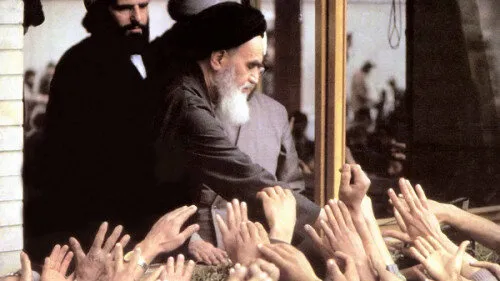
Tehran - BORNA - Far from being an archival ideology, this political-philosophical framework serves as the active strategic baseline for Iran’s current asymmetric resilience, translating traditional jurisprudence into a modern blueprint for national defense and international diplomacy.
The Doctrine of Non-Aggression: Distinguishing Offensive vs. Defensive Jihad
A critical cornerstone of Ayatollah Khomeini's military philosophy is the explicit structural division between "Primary Jihad" (offensive operations) and "Defensive Jihad." Within Shiite political jurisprudence, offensive warfare is strictly restricted to the era of the Infallible Imam. Consequently, during the contemporary era of occultation, state military action is confined exclusively to defensive frameworks.
This ideological pillar establishes that Iran’s defense doctrine is structurally defensive and peace-oriented, fundamentally rejecting expansionist militarism or unprovoked aggression. The primary objective remains the preservation of national sovereignty and the peaceful expansion of diplomatic relations through mutual respect and international engagement.
Conceptualizing Hybrid Warfare: Beyond Conventional Military Aggression
Long before contemporary security studies formalized the concept of "Hybrid Warfare," Ayatollah Khomeini expanded the definition of aggression beyond traditional kinetic strikes. His doctrine explicitly recognizes that foreign intervention can manifest via non-military vectors, including economic sanctions, cultural subversion, and social destabilization.
By classifying systemic economic embargoes or foreign-backed disinformation campaigns as overt forms of hostility, the doctrine provides the legal and theological justification for the state to deploy comprehensive counter-measures, viewing resistance against foreign economic and political dominance as a mandatory national and religious duty.
Decentralized Civil Defense: The Universal Obligation of Resistance
In his seminal jurisprudential text, Tahrir al-Wasilah, Ayatollah Khomeini outlined the frameworks of asymmetric civil defense. He decreed that if the foundational existence of the Islamic state or the security of the Muslim community is threatened by foreign invaders, defense becomes an absolute, unconditional individual obligation (Wajib al-Ayni) for every citizen.
Crucially, this operational clause states that defending the nation’s borders under existential threat is not contingent upon bureaucratic clearance, military hierarchy, or specific governmental commands. This concept provides the strategic baseline for Iran's deeply decentralized, grassroots defense architecture, transforming the entire populace into an active reserve force during national crises.
The Legal Framework of Cross-Border Counter-Offensives
A historical inflection point of this doctrine emerged during the conventional 1980s war imposed by the Ba'athist Iraqi regime. Following major territorial liberations, the strategy of crossing international borders to pursue the retreating invading forces was framed not as an expansionist move, but as a legitimate continuation of self-defense.
Ayatollah Khomeini maintained that entering enemy territory to dismantle the launchpads of daily missile attacks on civilian centers was a strategic necessity to enforce a durable peace. In modern international law, this logic directly aligns with the recognized concept of preemptive self-defense and the operational necessity of neutralizing active external threats to guarantee domestic security.
The Fusion of Ideology and Modern Strategic Resilience
The enduring legacy of this ideological framework is its emphasis on the total democratization of defense, prioritizing popular mobilization over exclusive reliance on conventional military structures. By treating civilian logistics, economic endurance, and intellectual support behind the frontlines as an active form of struggle, the doctrine maximizes national cohesion during long-term embargoes.
This deep ideological fusion continues to guide Iran's current political stance, linking past historical experiences to contemporary regional dynamics, and reinforcing the nation's unified front across both tactical fields and international diplomatic corridors.
End Article