Iran to review talks after US attacks: Baghaei
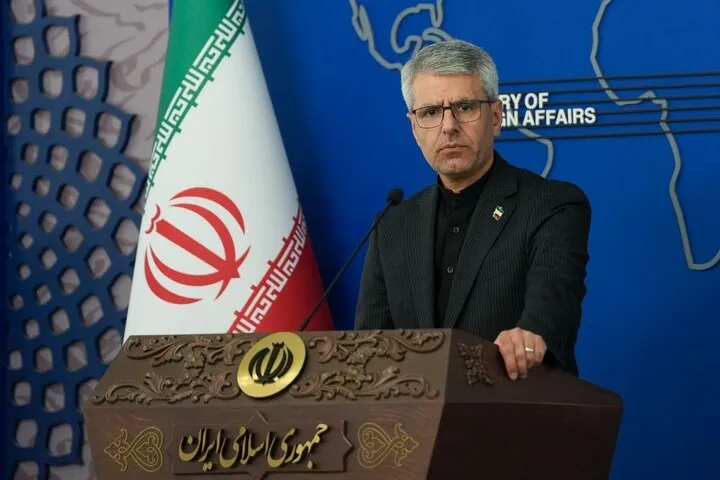
Tehran - BORNA - Esmaeil Baghaei made the remarks on the sidelines of the "Parsi-Jan" award ceremony while speaking to reporters regarding the latest status of negotiations between Iran and the United States.
"Given last night's developments, it is necessary to evaluate the recent conditions and shifts," Baghaei said. Stating that diplomatic processes do not take shape in a vacuum, he added, "To advance any negotiation or diplomatic framework, the existence of a minimum required environment is essential. Unfortunately, the United States damages this process by sending contradictory messages, repeatedly changing its positions and demands, and frequently violating ceasefires."
Baghaei also added that the Zionist regime similarly harms diplomatic trends through its repeated violations of the ceasefire in Lebanon, noting that it is natural for any diplomatic process to suffer from the resort to force and unlawful actions in the field.
The Foreign Ministry spokesperson emphasized that diplomacy and the field are not separate from one another, but rather function alongside each other as tools to safeguard Iran's national interests and national security.
"Wherever necessary, the Armed Forces of the Islamic Republic of Iran will respond to the enemy with power, and last night's events proved that the brave Armed Forces of Iran do not hesitate in defending the country," he continued.
Esmaeil Baghaei pointed out that all pillars of the ruling establishment act in full coordination within the diplomatic sphere, utilizing diplomatic tools wherever necessary, and military capabilities wherever required, to defend the nation.
Continuing his conversation with reporters at the Parsi-Jan event—where he was honored with the "Sarv-e Simin" (Silver Cypress) award—Baghaei stated: "It is a matter of pride for me. Granting this award for the importance given to the Persian language and the correct, timely, and effective use of Persian literature to convey concepts and express accurate narratives—especially regarding the developments of recent months—is a valuable initiative by our colleagues. I did not consider myself worthy of such trouble and kindness."
He added that the Foreign Ministry's spokesperson office and the ministry as a whole, being a vital sector of national sovereignty, have always been dedicated to protecting the Persian language as the most important pillar of Iran's identity, civilization, and culture.
The spokesperson noted: "The very holding of this session, particularly on the morning after a night where we powerfully flexed our muscles against the enemy's malice in the field, is highly significant. Iranians are ready to confront the enemy's mischief with bravery, composure, and full awareness of all their civilizational, cultural, and intellectual assets. Gathering in these sessions reminds us who we are, what we possess as Iranians, and how proud we are of our rich intellectual and civilizational heritage. All of this helps us cross the most difficult passes with authority."
Regarding the message of cultural consultations during wartime, he referenced a narration from Imam Ali, stating that the true core and essence of a nation and a civilization reveal themselves during hard times. He added that if this awakening, motivation, and seriousness in content production are visible, it stems from a deep belief in the righteousness of a nation determined to defend its dignity, honor, and national sovereignty.
Baghaei concluded by emphasizing the extraordinary role of literature, calling it a main factor of national cohesion and a primary source of self-confidence that ensures the enemy will be frustrated, stating that the literary assets of Iran inject passion, fervor, and consciousness into society.
End Article