Checkmate in Iran; Power to close the Strait of Hormuz higher than nuclear capability
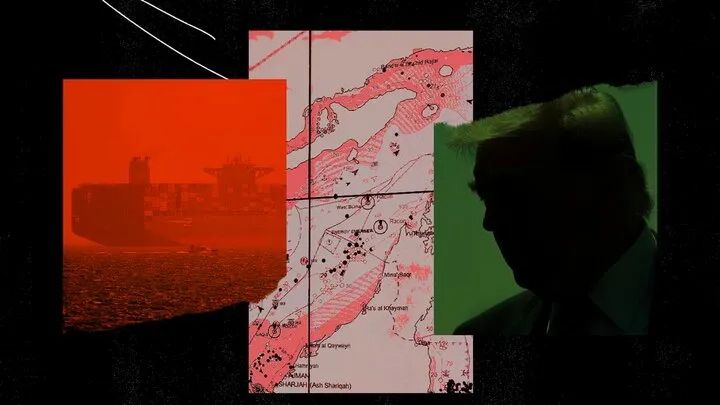
Tehran - BORNA - The United States has experienced defeats in the past such as Pearl Harbor, the wars in Afghanistan and Vietnam, but these wars were either compensated for or did not cause permanent damage to America's global standing. However, a potential defeat in the current confrontation with Iran will be of a completely different nature—an irreparable defeat that brings the Strait of Hormuz under Iran's control, turns Iran into a key regional and global player, strengthens the role of China and Russia as Iran's allies, and significantly reduces the role of the United States. This conflict, contrary to what war supporters have repeatedly claimed, does not represent American power, but has revealed an America that is unreliable and incapable of finishing what it started. This will create a chain reaction across the world, as friends and enemies will remember America's defeat.
The Atlantic magazine, in a note by Robert Kagan, one of the most influential neoconservative figures in America, wrote with this introduction: "President Trump likes to talk about who has the 'cards,' but whether he has good cards to play is unclear. Despite 37 days of American and Israeli attacks on Iran, which led to the assassination of the leader and a large number of high-ranking Iranian political and military officials, these attacks failed to overthrow the government or force it into the slightest concession. The Trump administration hopes to achieve through a blockade of Iranian ports what was not achieved by military force, but a government that did not surrender in the face of five weeks of relentless attacks is unlikely to surrender to economic pressure alone. Proponents of continuing the war want the resumption of military attacks, but they cannot explain why new attacks will achieve what 37 days of bombing did not."
According to Kagan, "Trump did not stop the attacks on Iran because he got tired of them; rather, the reason was the targeting of important energy facilities in the region by Iran. The turning point was March 18, when after the Zionist regime's attack on Iran's South Pars gas field, the Iranian Armed Forces targeted the Qatari Ras Laffan facilities, and Trump's reaction was to declare a ceasefire without the slightest concession from Iran."
Targeting Ras Laffan
He believes: "The assessment of the risks that forced Trump to retreat a month ago still stands. Even if Trump carries out his threat to destroy Iranian civilization with more attacks, Iran will still be able, before the potential fall of its government, to fire many missiles and drones whose only a few temporary strikes can paralyze the region's oil and gas infrastructure for years and plunge the world and America into a long-term economic crisis and inflation."
Apparently, the U.S. President has in recent days asked the country's intelligence community to assess the consequences of merely declaring victory and withdrawing from the war, as hoping for "government collapse," especially when this government has been able to withstand repeated attacks, is not a strategy. Trump does not have much time, despite oil prices approaching $150 or $200 per barrel, rising inflation, and global shortages of food and consumer goods. Trump is not checkmated, but he is close to it.
Every solution except American surrender is highly risky
The American publication, noting that "any solution except an effective American surrender carries great risks that Trump has so far been unwilling to face," wrote: "Otherwise, America must prepare for a full-scale ground and naval war to overthrow the Iranian government, then occupy the country, lose American military lives, and lose warships in the strait controlled by Iran. Therefore, withdrawing from the war at present may seem the least damaging option. From a political perspective, Trump likely believes he has a better chance of surviving a defeat than surviving a larger, longer, and more costly war that may still end in failure. Hence, an American defeat is not just possible, but probable."
The article adds: "Defeat means that Iran retains control of the Strait of Hormuz. Contrary to popular belief, it is not clear that the strait will return to its previous state after the current crisis, because Iran has no interest in returning to the previous status quo, and even the moderates in Tehran know they cannot pass up this opportunity, especially after Trump approved attacks similar to Pearl Harbor during negotiations; they do not consider him reliable."
By controlling the strait, Iran gains power beyond its theoretical nuclear capability and can impose tolls on ships and even restrict the movement of countries with which it does not have good relations. This leverage enables Tehran to dictate the lifting of sanctions and the normalization of relations to countries. In this situation, Israel becomes more isolated than ever and comes under international pressure not to provoke Tehran. Meanwhile, according to experts, the Arab governments of the Persian Gulf, whose economies were built under the umbrella of American hegemony, will be forced to plead with America.
Kagan concluded: "America's defeat in the Persian Gulf will also have broader global consequences. The entire world sees that only a few weeks of war with a second-tier power has brought America's weapons stockpiles down to a dangerous level, and there is no quick fix for it. This issue may encourage Chinese President Xi Jinping to attack Taiwan or Russian President Vladimir Putin to intensify aggression against Europe; but at the very least, America's allies in East Asia and Europe will have doubts about America's ability in future conflicts. Global adaptation toward a post-American world has accelerated, and America's dominance over the Persian Gulf will be only one of the losses of the recent developments in West Asia."
End Article