Nepal’s Generation Z: The Youth Who Turned Politics Digital
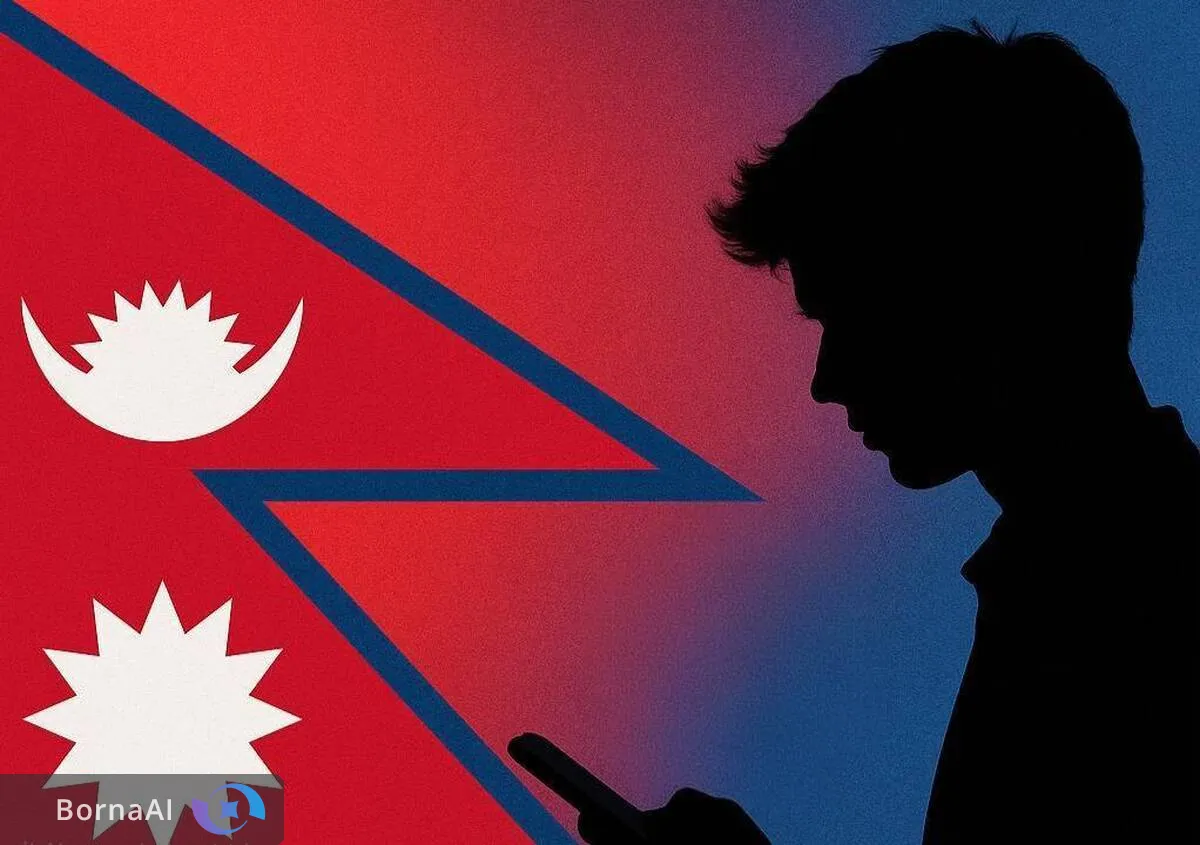
Tehran - BORNA - In just a matter of days, Nepal’s Generation Z transformed the country’s political landscape, demonstrating the extraordinary power of social media and artificial intelligence in shaping modern politics. Their mobilization led to the resignation of the Prime Minister amid a sudden wave of protests—an event that underscored how deeply technology and digital life have penetrated the daily and political experience of this generation.
Digital Uprising
In a country of 30 million people, with internet penetration above 90 percent, separating politics from the digital sphere has become nearly impossible. Gen Z Nepalis leveraged platforms like Facebook, Instagram, X, and TikTok to amplify their voices, replacing traditional media and becoming the primary channel of protest. Their messages spread far beyond Nepal’s borders, drawing international attention.
Alarmed by the momentum, Nepal’s Ministry of Communications blocked major social networks, citing the platforms’ failure to register locally and accusing users of spreading hate and misinformation under fake identities. “We gave them multiple opportunities, but they ignored us. We had no choice but to shut them down,” said Prithvi Subba Gurung, Minister of Communications and Information Technology.
Critics, however, dismissed the move as a desperate attempt to silence young voices. They warned that sweeping censorship would only deepen mistrust between the government and its youth.
AI as a Political Actor
One of the most striking aspects of the protests was the use of artificial intelligence to select a temporary leader after the Prime Minister’s resignation created a power vacuum. The group Youth Against Corruption asked an AI tool to generate a shortlist of qualified candidates.
The algorithm suggested several prominent figures, including Sagar Dhakal, Sumana Shrestha, Balendra Shah, and Sushila Karki. In a groundbreaking moment, Karki—the first female Chief Justice of Nepal—was chosen as interim leader.
For Gen Z, this was more than symbolism. It signaled their trust in technology as part of the political process and their readiness to merge algorithms with democratic decision-making.
Between Tradition and Innovation
Unlike previous generations that operated within party structures and closed-door meetings, Gen Z is blending street protests with Instagram posts, merging traditional activism with digital tactics. For them, an algorithmic endorsement can be as legitimate as party consensus.
This signals the rise of a “techno-politics” model—one that exists both on the ground and in the cloud, reshaping how legitimacy and participation are defined.
Military Shadow and Uncertain Future
Despite the youth-driven wave, Nepal’s political trajectory remains uncertain. The army has declared martial law in the capital, with military leaders now key players in the country’s transition. The interim leader’s meeting with top commanders reflects efforts to stabilize the situation. But as global precedents suggest, without recognizing youth participation, sustainable change will remain elusive.
Meanwhile, heavy censorship could backfire, pushing tech-savvy Gen Z toward more creative ways of bypassing restrictions. Such a dynamic risks widening the gap between state and society.
Toward a “Digital Democracy”?
The unfolding events pose a critical question: Is Nepal ready for a form of digital democracy? For a generation raised on the internet—where politics is debated on feeds, decisions are shaped by algorithms, and leaders can be crowd-sourced—the old frameworks are becoming obsolete.
For the first time, Gen Z’s political weight is undeniable. Nepal’s politics are no longer exclusively determined by party leaders or military generals. Millions of digitally connected young citizens are redefining the country’s future with smartphones in hand and algorithms at their side.
The message for governments is clear: restricting digital tools is unsustainable. Instead, new frameworks for youth participation must be developed. Nepal may not be the first to face such a challenge, but it has now become a critical case study of how politics in the 21st century can be redefined by digital natives—and why ignoring them is no longer an option.
End Article