The Intercept: Pentagon Still Concealing True Casualties of War with Iran
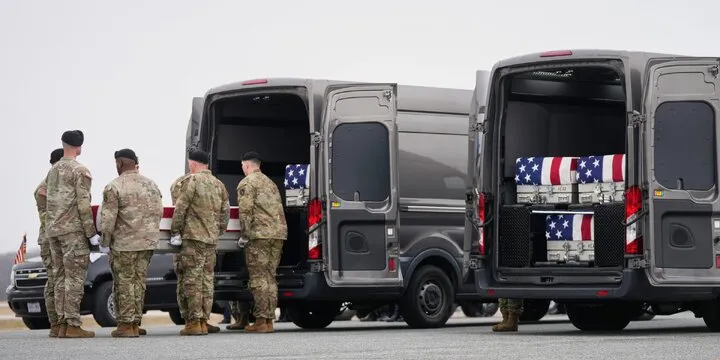
Tehran - BORNA - This follows an earlier exposé by the same outlet which quoted a Pentagon official admitting that the ministry is "covering up the number of American casualties in the war with Iran." Despite media pressure, the latest figures released by the office of Defense Secretary Pete Hegseth are said to significantly downplay the actual count of dead and wounded.
Inconsistencies in Official Data
The Pentagon’s Defense Casualty Analysis System (DCAS) has officially recorded only 13 "hostile and non-hostile" deaths. However, The Intercept points out glaring omissions, such as Major Sorflee Davies of the New York Army National Guard, who died in Kuwait during the conflict but remains absent from the list.
The report describes the discrepancy in injury counts as even more severe. While U.S. Central Command (CENTCOM) claimed "approximately 303" wounded in an email, the DCAS website displays contradictory figures—listing 372 wounded on one page and 357 on another.
Furthermore, official statistics exclude "non-hostile" injuries. A notable example is the case of over 200 sailors on the USS Gerald R. Ford, who suffered smoke inhalation and injuries during a massive fire in March; they have not been included in any official casualty reports.
A Pattern of Deception
The report highlights Washington’s long history of concealment, recalling the 2020 Iranian missile strike on Ain al-Asad. At the time, President Trump claimed "no Americans were harmed," only for the Pentagon to later admit to 110 cases of traumatic brain injury (TBI).
A similar pattern was observed in the recent F-15 pilot rescue operation. While Trump and Hegseth claimed "zero casualties," reports indicate the pilot was severely wounded. The Intercept’s previous analysis suggests that since the conflict began on February 28, 2026, at least 15 U.S. service members have died and over 520 have been wounded.
The investigation underscores a lack of protection for U.S. troops, noting that the Army—which suffered the highest losses (251) compared to the Navy and Air Force—still lacks blast-injury sensors.
Looking ahead, the economic consequences are staggering. Long-term medical costs for Americans injured in the war with Iran are projected to reach trillions of dollars. If disability compensation matches the scale of the 1991 Gulf War, it could impose a lifetime budgetary burden of approximately $600 billion on the United States.
End Article