NYT: Trump Faces 60-Day Deadline Pressure to End War Against Iran
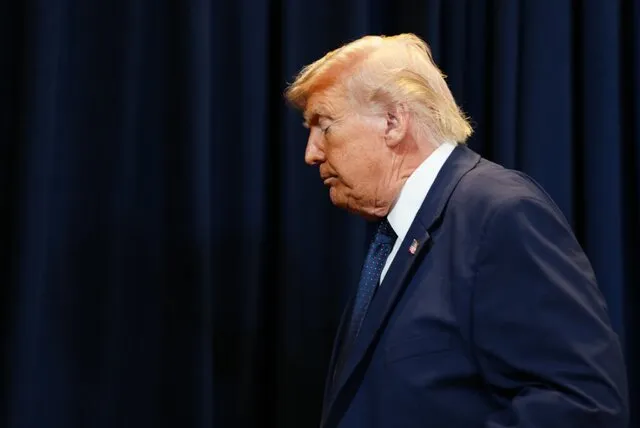
Tehran - BORNA - The New York Times notes that while nearly eight weeks have passed since the initiation of the aggressive war by the U.S. and the Zionist regime against Iran, Congressional Republicans have repeatedly blocked Democratic efforts to halt operations and force Trump to consult with lawmakers regarding a war he launched without a formal mandate.
Nevertheless, some Republicans have signaled that a legal deadline in the coming weeks could serve as a major turning point. They anticipate that the U.S. President will either have to de-escalate the conflict or seek formal authorization from Congress to continue.
U.S. Democrats have made several unsuccessful attempts to challenge the war by citing the War Powers Resolution of 1973, designed to limit the President's ability to initiate war without congressional consent. Most recently, on Wednesday, Senate Republicans rejected such a proposal for the fifth time.
Despite these legislative hurdles, the law sets a series of deadlines—the first of which falls on May 1—that could significantly increase pressure on the Trump administration. When the U.S. launched joint attacks with the Zionist regime on February 28, Trump claimed the action fell under his authority as "Commander-in-Chief" to "defend" U.S. bases in the Middle East and "advance vital national interests."
He further asserted the action was part of "collective defense for regional allies, including Israel." Many Democrats have rejected this justification, labeling the conflict illegal.
Under the statute, the President has 60 days to withdraw U.S. forces from hostilities if Congress has not authorized the action. Trump formally notified Congress on March 2; therefore, this window expires on May 1.
The New York Times reports that some Republicans have now stated they will not support continuing the war beyond this timeframe without congressional approval. Senator John Curtis indicated he would not support military operations exceeding the 60-day limit without a vote, while Brian Mast, a key figure in the House, warned that political support for the President could erode if the war against Iran persists into May.
Once the 60-day period expires, the President's options narrow. The law allows for a one-time 30-day extension, provided the President certifies in writing that the additional time is "essential" for the "safe withdrawal" of troops. Crucially, this extension does not authorize the continuation of offensive operations.
Ignoring this deadline could carry a heavy political cost for Republicans, many of whom have previously acknowledged the significance of the 60-day rule. Senator Chris Murphy noted: "It’s going to be much harder for Republicans to look the other way once we cross that 60-day mark."
End Article