Experts Warn Seizure of Kharg Island Could Trigger Heavy US Losses, Swift Iranian Response
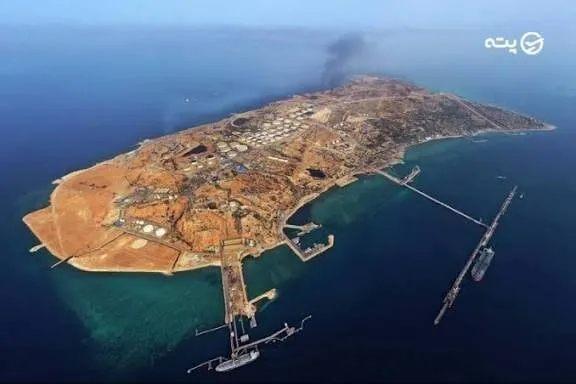
Tehran - BORNA - A political analyst specializing in U.S. affairs said that if the United States moves to occupy Kharg Island, Iran’s armed forces would be capable of destroying the stationed forces within just two hours.
Rafael Ordokhanian stated in his analysis of recent proposals concerning control of the island—located just 25 kilometers off Iran’s coast—that such a move would amount to nothing but a gamble.
He emphasized that the island is part of Iran’s territory and that all vital targets there have already been identified and prepared for targeting.
According to the expert, even if U.S. forces attempt to withdraw, Iranian forces would be able to enter the island, form combat units, and take full control of the Strait of Hormuz.
Ordokhanian stressed that destroying U.S. positions would take no more than two hours and would be carried out through a concentrated strike on pre-identified targets.
He added that operational challenges for Washington would be compounded by weaknesses in its air defense systems, noting that U.S. forces would not have sufficient time to establish effective defensive cover to protect ground troops.
Meanwhile, Axios reported on March 20, citing informed sources, that Washington is considering two options: imposing a naval blockade or launching a military operation to seize Kharg Island.
In addition, The Jerusalem Post reported that senior U.S. officials have told Israeli counterparts and other allies that a ground option to control the island may be the only remaining way to increase pressure on Iran.
Separately, military analyst Igor Korotchenko addressed the possibilty of a U.S. takeover of Kharg Island, stating that while such an operation may be possible, it would undoubtedly result in heavy casualties for U.S. forces.
He explained that if the island were to fall under U.S. control, Iran’s armed forces and the Islamic Revolutionary Guard Corps would be able to target it not only with ballistic missiles and drones, but also with artillery and multiple launch rocket systems, given its close proximity to Iran’s mainland.
The analyst also noted that covertly approaching the island would be extremely difficult, whether through amphibious vessels, helicopters, or tilt-rotor aircraft. In such conditions, Iranian forces could employ a wide range of weaponry, including man-portable air-defense systems against aerial targets and unmanned suicide boats against naval targets.
In response to a question about whether such an operation could trap U.S. forces on the island, Korotchenko said this scenario is plausible, though he added that Washington might combine an amphibious assault with a broader military attack against Iran.
He emphasized that scenarios remain fluid and that such a move could either be part of a military deception operation aimed at pressuring Iran to reopen the Strait of Hormuz or a genuine plan by the Pentagon.
The analyst further warned that such a conflict could lead to large-scale Iranian attacks on infrastructure across the Persian Gulf region, including oil and gas facilities and export terminals.
He also pointed to what he called a major miscalculation by Donald Trump, the Pentagon, and U.S. intelligence agencies, noting that despite repeated threats, the United States is widely seen as being in a difficult position.
From an economic perspective, analysts warned that disruption to Kharg Island could remove between 1.5 to 1.7 million barrels of oil per day from global markets, potentially driving prices up to between $120 and $160 per barrel.
Finally, some former U.S. intelligence officials cautioned that any such ground operation would be a full-scale disaster, with American forces likely to be destroyed shortly after deployment.
These warnings are not limited to the United States. British military analysts have also stressed that a large-scale ground attack on Iran could end in a catastrophic failure, drawing parallels with the Gallipoli Campaign during World War I—highlighting the broad consensus on the serious risks of such a military venture in this sensitive region.
End Article