IAEA Warns of Potential Harmful Radiological Accident at Bushehr Nuclear Power Plant
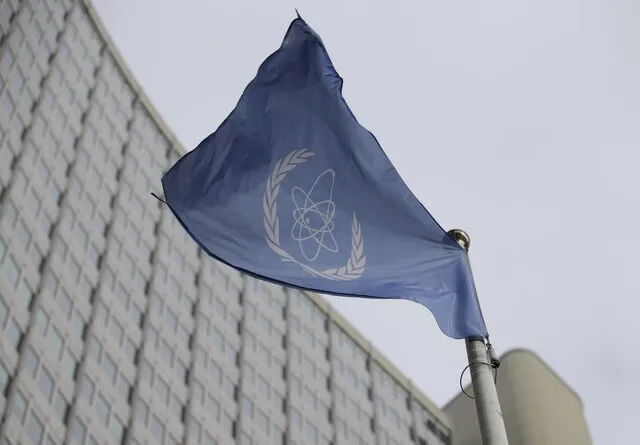
Tehran - BORNA - Following repeated U.S.-Zionist attacks on the grounds of the Bushehr Power Plant during the imposed war against Iran, the International Agency warned of the possibility of "a severe radiological accident with harmful consequences for people and the environment in Iran and beyond."
In a statement published on its page on the social network X, the Agency announced: "Based on its independent analysis of new satellite images and precise knowledge of the location of these facilities, the Agency confirms that recent military attacks near the Bushehr Nuclear Power Plant in Iran, including an attack just 75 meters from the facility's outer fence, have left impacts."
The statement also added that the facility itself had not been damaged as of Sunday.
The UN nuclear watchdog added: "Director General Rafael Grossi once again warns that continued military activity near the Bushehr Power Plant, which is an active facility with a large volume of nuclear fuel, could cause a severe radiological accident with harmful consequences for people and the environment in Iran and beyond."
According to this statement, Grossi called for a halt to all attacks near nuclear facilities, as these attacks "pose a very real risk to nuclear safety."
With the repetition of illegal U.S.-Zionist attacks on Iran’s national sovereignty and territorial integrity, which began on February 28, 2026, the Bushehr Power Plant, the Shahid Ahmadi Roshan facilities in Natanz, the yellowcake production plant in Ardakan (Yazd), and the Khandab heavy water facilities have so far been targeted by enemy projectiles and bombardment. However, from the perspective of the Agency and its Director General, these actions are not yet considered a violation of international rules and standards. Furthermore, the IAEA Director General merely called for military restraint to prevent any risk of a nuclear accident.
In this regard, Mohammad Eslami, the President of the Atomic Energy Organization of Iran (AEOI), in a formal letter to Grossi following the recent attack on the Bushehr Nuclear Power Plant on April 4, wrote: "This attack is being carried out for the fourth time against Unit 1 of the Bushehr Nuclear Power Plant and could carry the risk of a widespread release of radioactive materials from an operational reactor—an issue that would bring irreparable consequences for people, the environment, and even neighboring countries."
Eslami also considered this action a blatant violation of the principle of prohibition of attacks on nuclear facilities under the safeguards of a member state of the Non-Proliferation Treaty (NPT) and described it as a clear manifestation of a war crime and a threat against the global non-proliferation order.
In another part of this letter, it was emphasized: "These military attacks violate the Geneva Conventions and relevant protocols, the IAEA Statute, the Non-Proliferation Treaty (NPT), Iran’s Comprehensive Safeguards Agreement (INFCIRC/214), Board of Governors' resolutions, and the Agency's safety standards."
The President of the Atomic Energy Organization of Iran, also criticizing the inaction of the Agency and the Director General personally regarding these attacks, stated that merely expressing "deep concern" without an explicit condemnation of these aggressive actions is not enough, and such an approach can embolden the aggressors to repeat these attacks.
End Article